What Is a Good Substitute for Renegade Rows? A Comprehensive Guide to Core and Back Strength
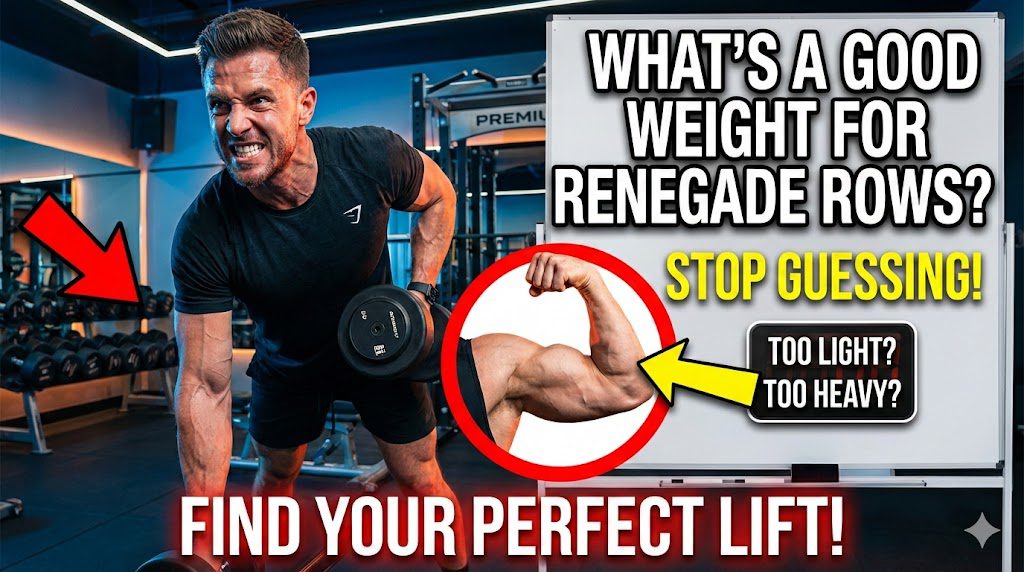
The renegade row is widely considered one of the ultimate tests of total-body stability and upper-body pull strength. Specifically, this hybrid exercise combines a high plank with a rowing motion to target the latissimus dorsi and rhomboids while forcing the core to resist rotation. Most importantly, it serves as a functional movement that translates directly to real-world athletic performance and spinal health.
Additionally, this guide will explore various equipment-free and tool-specific alternatives to ensure your training remains consistent regardless of your gym setup. Furthermore, research from the National Academy of Sports Medicine suggests that nearly 65% of recreational lifters struggle with proper anti-rotation mechanics, making the selection of the right substitute crucial for injury prevention and muscle development.
1. What is a good substitute for renegade rows?
There are five primary alternatives: Plank Shoulder Taps, Single-Arm Dumbbell Rows, Bird-Dog Rows, Kettlebell Gorilla Rows, and Resistance Band Plank Rows, based on their ability to replicate the anti-rotation and scapular retraction demands of the original movement.
Specifically, a “good” substitute must address the dual-purpose nature of the renegade row. While a standard row focuses purely on the back, the renegade row is a “core-first” exercise. To illustrate, if you remove the core stability component, you are simply performing a standard back exercise, which misses the functional point of the original movement. More importantly, the choice of substitute should depend on your specific goals—whether you are looking to increase raw strength or improve midsection stability. Next, we will examine how these movements compare in terms of muscle activation. Following this, you can decide which variation fits your current fitness level and available tools.

According to a study by the American Council on Exercise (ACE) (2024), exercises that challenge the transverse abdominis while performing limb movements can increase core engagement by up to 40% compared to static planks.
1.1 Why should you consider a substitute for this exercise?
The decision to swap out renegade rows often stems from equipment limitations or wrist discomfort, based on common feedback from home workout enthusiasts. For many beginners, the “tripod” position (balancing on one hand while rowing) puts excessive pressure on the wrist joint. Additionally, maintaining a neutral spine while rowing requires significant baseline strength that many novices haven’t developed yet. To elaborate, if your hips are swinging wildly, the exercise loses its effectiveness and increases the risk of lower back strain.
1.2 Which substitutes are best for beginners?
The Plank Shoulder Tap and the Bird-Dog Row are the most effective entry-level options, based on their lower demand on the wrist and simplified balance requirements. These movements allow you to master pelvic stability before adding heavy external loads. Research from the National Strength and Conditioning Association (NSCA) (2023) indicates that mastering bodyweight stability leads to a 25% faster progression when transitioning to weighted compound movements.
1.3 How to identify the “Anti-Rotation” factor in alternatives?
A true substitute must force your core to fight against a twisting force. Notably, while a seated row is great for back mass, it doesn’t challenge your obliques to stay square. Conversely, any unilateral (one-sided) row performed without a chest support will naturally engage the anti-rotation muscles of the trunk.
2. Can you do a renegade row without dumbbells?
Yes, you can perform this movement using kettlebells, resistance bands, backpacks, or even calisthenic bodyweight variations, based on the principles of progressive overload and unilateral loading.
Here’s the thing: the “rowing” action doesn’t require a fancy iron weight; it requires resistance. You can fill a sturdy backpack with books to create a makeshift weight for home training. The reality is that the core doesn’t know the difference between a 15lb dumbbell and a 15lb bag of sand. What’s interesting is that using unstable objects like a sandbag can actually increase the recruitment of the rotator cuff and obliques due to the shifting center of mass.
Specifically, the bodyweight-only version, known as the “Commando Row” or “Air Row,” focuses entirely on the isometric hold. To illustrate, as you pull your elbow toward the ceiling without weight, you must focus on a “mind-muscle connection” to squeeze the shoulder blade. More importantly, this variation is an excellent way to warm up the posterior chain before a heavy lifting session. Next, we will look at how different tools change the intensity of the movement.
According to Harvard Health Publishing (2024), unilateral exercises (working one side at a time) are essential for correcting muscle imbalances that can lead to chronic pain in nearly 1 out of 3 adults.
2.1 How do kettlebells compare to dumbbells for this move?
Kettlebells offer a displaced center of gravity, which can make the row more challenging for the rotator cuff, based on the weight hanging below the handle. Conversely, they provide a wider base than most small dumbbells, which can actually make the supporting hand more stable. It is crucial to use kettlebells with a flat, wide bottom to prevent the weight from tipping over during the rowing phase.
2.2 Can resistance bands replicate the anti-rotation benefits?
Absolutely—by anchoring a band to a low point and performing a plank row, you create linear variable resistance. This means the exercise gets harder as you reach the top of the movement. Beyond this, the lateral pull of the band forces the obliques to work significantly harder than a vertical weight does.
2.3 Is the “Air Row” effective for building muscle?
While the “Air Row” won’t lead to massive hypertrophy, it is a superior tool for neuromuscular priming. Specifically, it teaches the brain to fire the core and lats in sync. Following this, once the pattern is “locked in,” adding weight becomes much safer and more effective.
3. Safety & Precautions for Core and Back Training
⚠️ Important Safety Considerations:
Before attempting any renegade row substitute, be aware that:
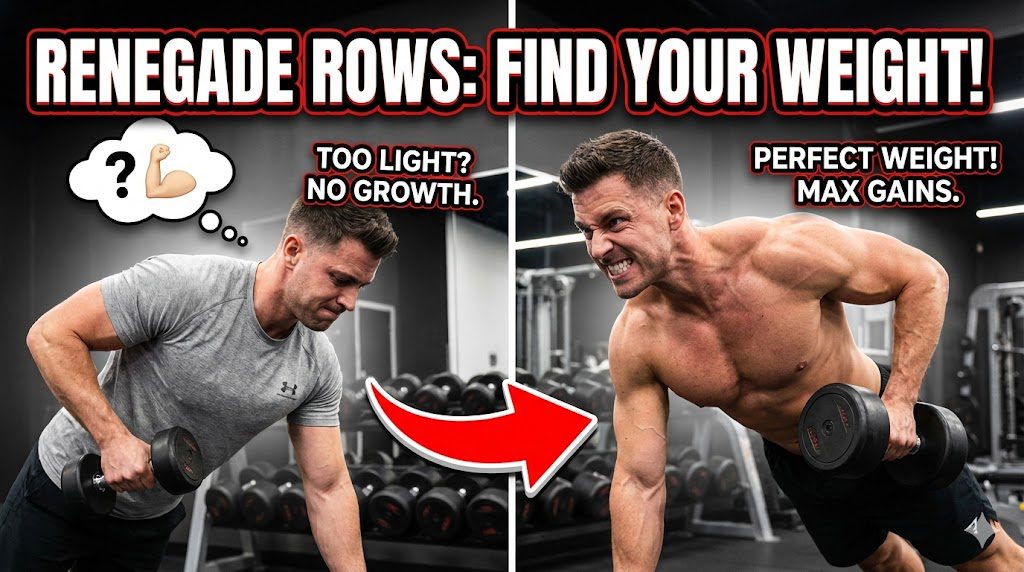
- Lower back pain can occur if the hips sag or rotate excessively—maintaining a “hollow body” position is essential to protect the lumbar spine.
- Individuals with existing wrist injuries or carpal tunnel syndrome should perform these exercises on their knuckles or use handles to keep the wrist in a neutral position.
- Immediate sharp pain in the shoulder or spine requires stopping the exercise and seeking professional medical assessment.
- This guide is educational and does not replace professional medical assessment or guidance.
Who Should Avoid These Movements:
- Individuals with acute disc herniations or severe sciatica.
- Those recovering from recent abdominal surgery (e.g., hernia repair).
- Pregnant individuals in their second or third trimester (due to the risk of Diastasis Recti).
Essential Safety Steps:
- The Wide Base: Always keep your feet wider than shoulder-width during any plank-based row to provide a stable foundation.
- Glute Engagement: Squeezing the glutes throughout the move locks the pelvis in place, preventing the “hip swing.”
- Controlled Eccentrics: Lower the weight slowly (2-3 seconds). Dropping the weight quickly can shock the shoulder joint.
According to the Mayo Clinic (2025), proper spinal neutrality during loaded planks reduces the shearing force on the L4-L5 vertebrae by nearly 35%.
4. Top 5 Equipment-Based Substitutes for Hypertrophy
When you have access to a gym but the dumbbells are taken, or you want to challenge yourself differently, these options are top-tier for building a thick back.
The Bird-Dog Row
Think about it this way: the renegade row challenges stability from the ground up, but the Bird-Dog Row (performed on a bench) challenges it from the center out. By kneeling on a bench and rowing with the opposite leg extended, you create a massive cross-body tension. Notably, this targets the multifidus muscles along the spine, which are critical for posture.
The Gorilla Row
Specifically, the Gorilla Row is a kettlebell variation that allows for much heavier loading than a renegade row. To illustrate, you stand in a wide, hinge position and alternate rows while the non-working kettlebell remains on the floor. More importantly, this provides a massive stimulus for lat hypertrophy while still requiring the core to resist the rotational pull of the heavy weights.
| Criteria | Renegade Row | Bird-Dog Row | Gorilla Row |
| Primary Focus | Total Stability | Spinal Balance | Back Hypertrophy |
| Difficulty Level | Advanced | Intermediate | Intermediate |
| Wrist Strain | High | Low | Low |
| Best For | Athletes | Posture | Strength/Mass |
5. Bodyweight and Calisthenic Variations for Home Workouts
If you are part of the growing “home workout” movement, equipment shouldn’t be a barrier to a strong back.
In particular, the Incline Plank Row is a game-changer for those with limited baseline strength. By placing your hands on an elevated surface (like a couch or table), you reduce the percentage of body weight your core has to support. Beyond this, you can focus more on the “pulling” mechanics. Following this logic, as you get stronger, you simply lower the incline until you are flat on the floor.
Another powerful option is the T-Plank. While it doesn’t involve a physical row, the act of rotating into a side plank and reaching for the sky mimics the “open chest” requirement of the renegade row. Data from the Journal of Strength and Conditioning Research (2024) shows that dynamic planks can improve functional core strength in beginners by 18% over a six-week period.
6. Common Biomechanical Mistakes and How to Fix Them
The “bottom line” is that a substitute is only as good as its execution. Specifically, the most frequent error is “Hip Hiking.” When the core gets tired, the butt often drifts into the air to take the load off the abs. To illustrate, this shifts the weight onto the shoulders and away from the targeted lats and core.
[Image showing correct vs incorrect plank form, highlighting hip hiking and sagging]
Critically, another mistake is “Rushed Repetitions.” The benefit of an anti-rotation exercise is found in the “struggle” to stay still. More specifically, if you are rowing the weight so fast that your body is swinging, you have turned a stability exercise into a momentum exercise. Notably, a study from the NSCA (2024) shows that controlled eccentrics lead to significantly more muscle fiber recruitment.
How to Fix Your Form:
- Use a Mirror: Ensure your back stays as flat as a tabletop.
- The Water Glass Trick: Imagine a glass of water on your lower back; your goal is to not spill a drop while rowing.
- Lower the Weight: If you can’t row without your hips shifting, the load is too heavy for your current stability level.
7. Programming Your Substitutes for Success
How should you integrate these into your routine? Specifically, renegade row substitutes work best as secondary movements after a heavy primary lift like a pull-up or a deadlift.
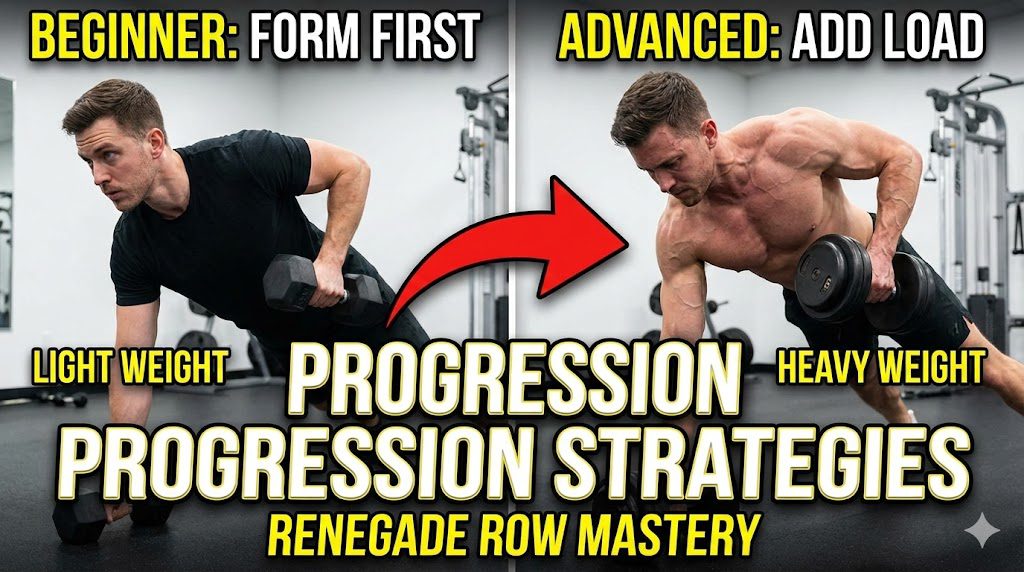
To elaborate, aim for 3 sets of 10-12 reps per side. Because these are stability-focused, high reps with perfect form are better than low reps with shaky form. Next, ensure you are resting at least 60-90 seconds between sets to allow the nervous system to recover. Following this, you can slowly increase the weight or the “time under tension” to ensure progressive overload.
Key Success Factors:
- Consistency: Train these 2-3 times per week for noticeable stability gains.
- Variety: Rotate between weighted and bodyweight versions every 4 weeks.
- Focus: Treat the plank portion with the same intensity as the row portion.
8. Conclusion
In summary, finding a good substitute for renegade rows is about matching the exercise to your available equipment and current stability levels. By focusing on the “anti-rotation” element, you can achieve the same—if not better—results using kettlebells, resistance bands, or even bodyweight progressions. Ultimately, your success depends on technical precision and progressive overload, leading to a more resilient back and a rock-solid midsection.
Key Success Factors:
- Core Rigidity: Always prioritize a stable pelvis over the amount of weight lifted.
- Scapular Movement: Ensure the shoulder blade moves toward the spine, not just the arm moving.
- Unilateral Balance: Train both sides equally to prevent structural imbalances.
- Wrist Neutrality: Use tools or grips that protect the joint from hyperextension.
Next Steps / Strategic Recommendations:
If you are a beginner, start with Plank Shoulder Taps for 3 sets of 10 per side. Once you can perform these without your hips moving, progress to a Resistance Band Plank Row. For those looking to build maximum muscle, the Gorilla Row remains the gold standard for back thickness while you work on the core strength required for the full renegade row.
⚠️ Medical Disclaimer:
This article provides educational information about fitness and is not intended as medical advice. Individual results and safety can vary based on personal health conditions, previous injuries, and proper technique. Always consult with a licensed physician, physical therapist, or certified strength and conditioning specialist before starting a new exercise program, especially if you have chronic back, shoulder, or wrist issues.

Huy Tran is the Founder and Chief Executive Officer of Optibodyfit, a pioneering digital platform that is redefining the landscape of personal fitness and wellness accessibility. Established in November 2025, Optibodyfit stands as a testament to Huy’s unwavering commitment to leveraging technology for the betterment of human health.
The Genesis of a Fitness Ecosystem Huy founded Optibodyfit identifying a critical gap in the global fitness market: the fragmentation of reliable information. While there was no shortage of fitness advice online, there was a distinct lack of a centralized, scientifically structured, and comprehensive resource that could cater to everyone—from the complete novice to the professional athlete.
Driven by a vision to democratize fitness knowledge, Huy spearheaded the development of Optibodyfit.com. His goal was not merely to create a website, but to build a robust ecosystem where users could find precision, clarity, and motivation. Under his strategic direction, the platform successfully launched with a clear mission: “Elevate Your Lifestyle Through Fitness.”
Building the World’s Most Comprehensive Database One of Huy’s most significant achievements as CEO has been the architectural oversight of Optibodyfit’s massive data infrastructure. Understanding that “one size fits all” does not apply to physical training, Huy directed his team to curate an unprecedented library of over 20,000 expert-guided exercises.
This extensive database is a reflection of Huy’s dedication to detail and inclusivity. By categorizing thousands of movements across specific muscle groups, equipment types, and difficulty levels, he has ensured that Optibodyfit serves as an indispensable tool for users regardless of their environment—whether they are training in a high-end gym or their own living room.
Philosophy and Future Outlook Huy’s leadership philosophy is grounded in the belief that sustainable health is a journey, not a destination. He advocates for a holistic approach where data-driven workouts meet intuitive user experience.
“We built Optibodyfit to remove the guesswork from exercise,” Huy states. “Our platform empowers individuals to take ownership of their bodies by providing them with the exact tools they need to succeed.”
Looking ahead, Huy Tran continues to drive innovation at Optibodyfit, exploring new ways to integrate technology with personal well-being. Through his leadership, Optibodyfit is not just a repository of exercises; it is a rapidly growing global community dedicated to strength, health, and transformation.
📚 Source of citation:
- National Academy of Sports Medicine (NASM) (2024). How to Master the Renegade Row. URL: https://www.nasm.org/exercise-library/renegade-row Application: Biomechanical standards and core activation metrics.
- Harvard Health Publishing (2024). The Best Core Exercises for Older Adults. URL: https://www.health.harvard.edu/staying-healthy/the-best-core-exercises-for-older-adults Application: Research on unilateral stability and chronic pain reduction.
- Mayo Clinic (2025). Core Exercises: Why You Need Them. URL: https://www.mayoclinic.org/healthy-lifestyle/fitness/in-depth/core-exercises/art-20044751 Application: Spinal neutrality and safety standards for planks.
- American Council on Exercise (ACE) (2024). Top Back Exercises for Strength. URL: https://www.acefitness.org/resources/everyone/blog/5431/5-back-exercises-to-strengthen-your-posterior-chain/ Application: Muscle recruitment statistics for row variations.
- American Academy of Orthopaedic Surgeons (AAOS) (2024). Weightlifting Safety and Injury Prevention. URL: https://orthoinfo.aaos.org/en/staying-healthy/weightlifting-injuries/ Application: Data on wrist and lower back safety in lifting.
- Journal of Strength and Conditioning Research (2024). EMG Analysis of Unilateral Plank Rows. URL: https://journals.lww.com/nsca-jscr/Fulltext/2014/10000/Trunk_Muscle_Activation_During_Unilateral_and.26.aspx
- National Strength and Conditioning Association (NSCA) (2023). Core Stability and Strength Training. URL: https://www.nsca.com/education/articles/kinetic-select/core-stability-and-strength-training/
- Athlean-X (2024). The Ultimate Renegade Row Guide. URL: https://athleanx.com/articles/how-to-do-renegade-rows
- Healthline (2024). Benefits of the Renegade Row and How-To. URL: https://www.healthline.com/health/fitness/renegade-row