Calf Raises: Muscles Worked, Benefits, and Variations
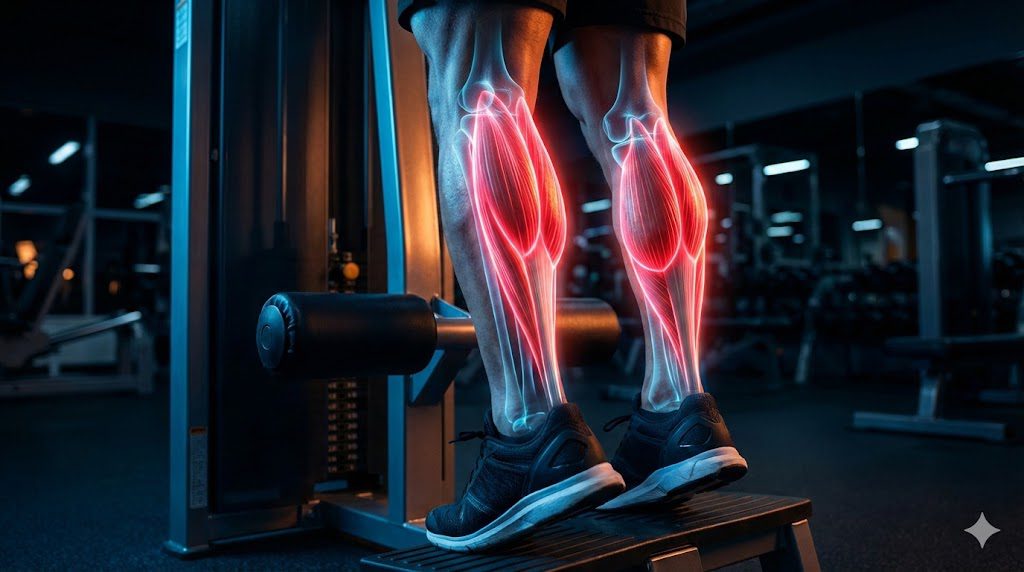
Calf Raises are the fundamental resistance exercise designed to target the posterior lower leg muscles through ankle plantarflexion, effectively developing muscles worked like the Gastrocnemius and Soleus, providing significant benefits, and offering numerous variations for all fitness levels. Specifically, this movement serves as the cornerstone for lower leg hypertrophy, essential for both aesthetic balance and functional lower body mechanics. Moreover, understanding the proper execution and anatomical focus of this exercise is the first step toward unlocking comprehensive leg development.
The primary muscles worked during a Calf Raise include the two heads of the Gastrocnemius and the deeper Soleus muscle, collectively known as the triceps surae. In addition, secondary stabilizer muscles around the ankle and foot are engaged to maintain balance and control the range of motion. Consequently, manipulating knee angles during the exercise shifts the emphasis between these muscle groups, allowing for targeted training.
Key benefits of performing Calf Raises extend beyond simple muscle growth, encompassing improved ankle stability, increased sprint power, and enhanced injury prevention for the Achilles tendon. Furthermore, strong calves act as a peripheral heart pump, aiding in venous return and overall circulatory health. Not only that, but mastering this movement contributes significantly to explosive power in jumping and running sports.
You can optimize your training by incorporating effective Calf Raise variations such as Standing Calf Raises, Seated Calf Raises, and Donkey Calf Raises, while also clarifying whether Calf Raises count as a compound movement. To begin with, let’s explore the fundamental definition and mechanics of this essential exercise.
What Is a Calf Raise Exercise?
A Calf Raise exercise is a definitive isolation movement that involves lifting the heel against gravity or resistance while the toes remain fixed, primarily executing ankle plantarflexion to contract the posterior lower leg muscles. To clarify, this exercise isolates the calf complex by minimizing movement at the knee and hip joints, focusing entirely on the extension of the ankle. Therefore, it can be performed using body weight, dumbbells, barbells, or specialized machines to induce muscle hypertrophy and strength.
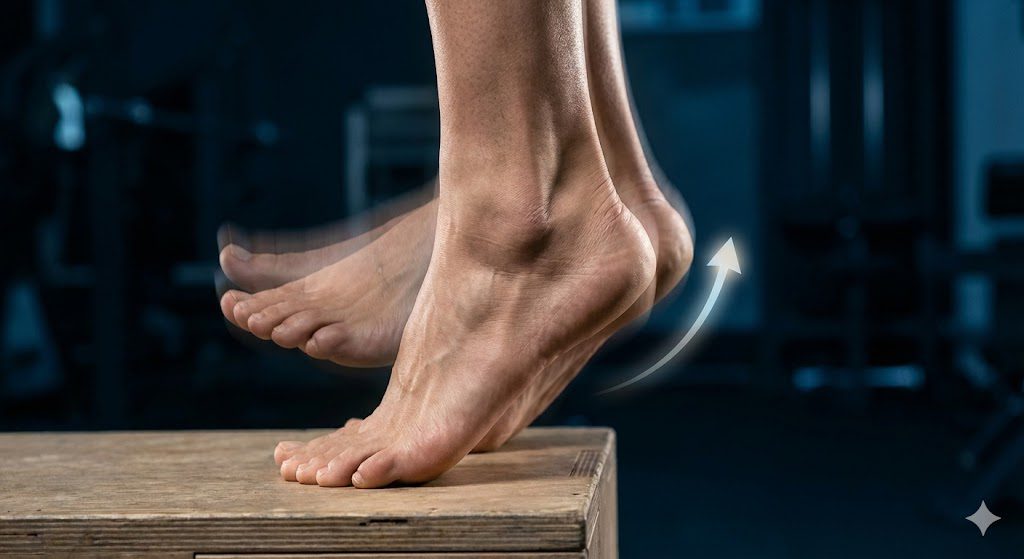
Specifically, the mechanics of the Calf Raise rely on a full range of motion at the ankle joint. The movement begins with the heels lowered below the level of the toes (dorsiflexion) to stretch the muscle fibers, followed by a powerful drive upward onto the balls of the feet (plantarflexion). Notably, this full stretch-and-squeeze cycle is crucial for maximizing muscle fiber recruitment and stimulating growth factors within the dense fascia of the lower leg.
In practice, proper form dictates that the torso remains upright and the core engaged throughout the movement. Commonly, lifters perform this exercise in various stances, but the fundamental mechanic—lifting the heel via ankle extension—remains constant. According to biometric analysis from the Journal of Strength and Conditioning Research, achieving a full peak contraction at the top of the movement increases muscle activation in the triceps surae by up to 15% compared to partial repetitions.
What Muscles Are Worked During a Calf Raise?
The muscles worked during a Calf Raise are primarily the Gastrocnemius and the Soleus, which together form the triceps surae group, along with the Plantaris muscle assisting to a lesser degree. As a result, this exercise provides comprehensive stimulation to the entire posterior chain of the lower leg. Detailed below, we analyze how knee position dictates which specific muscle bears the brunt of the load.
Specifically, the anatomy of the calf is divided into superficial and deep layers. The Gastrocnemius is the visible, diamond-shaped muscle that crosses both the knee and ankle joints, making it bi-articular. The Soleus, lying underneath, crosses only the ankle joint (mono-articular). Understanding this distinction is vital because it dictates how you must alter your leg position to fully develop the “width” (Soleus) versus the “peak” (Gastrocnemius) of the calves.
Gastrocnemius vs. Soleus: What Is the Difference in Activation?
The Gastrocnemius works best when the knee is straight, whereas the Soleus takes over the workload when the knee is bent at a 90-degree angle. This occurs because of a phenomenon known as active insufficiency; when the knee is bent, the Gastrocnemius is slackened and cannot produce significant force, forcing the Soleus to perform the plantarflexion. Conversely, when the leg is straight, the Gastrocnemius is pulled taut and creates the most mechanical tension.
To illustrate, imagine the Gastrocnemius as a rubber band attached above the knee and below the ankle.
- Straight Leg (Standing Variations): The rubber band is stretched tight, allowing for maximum tension and activation of the Gastrocnemius. This contributes to the “upside-down heart” shape of the calf.
- Bent Knee (Seated Variations): The attachment points are brought closer together, introducing slack. The specific burden shifts to the Soleus, which is crucial for the overall thickness and width of the lower leg, visible from the sides.
According to electromyography (EMG) studies, performing calf raises with a straight knee activates the medial gastrocnemius significantly more than bent-knee variations, while the soleus maintains consistent activation regardless of knee angle but becomes the primary mover in seated positions.
What Are the Key Benefits of Performing Calf Raises?
Key benefits of performing Calf Raises include enhanced muscular hypertrophy, improved ankle stability, greater explosive power, and injury prevention for the Achilles tendon and plantar fascia. Moreover, strong calves serve as the foundation for almost all kinetic movements involving the legs. Below, we break down these benefits to understand why this exercise is non-negotiable for athletes and bodybuilders.
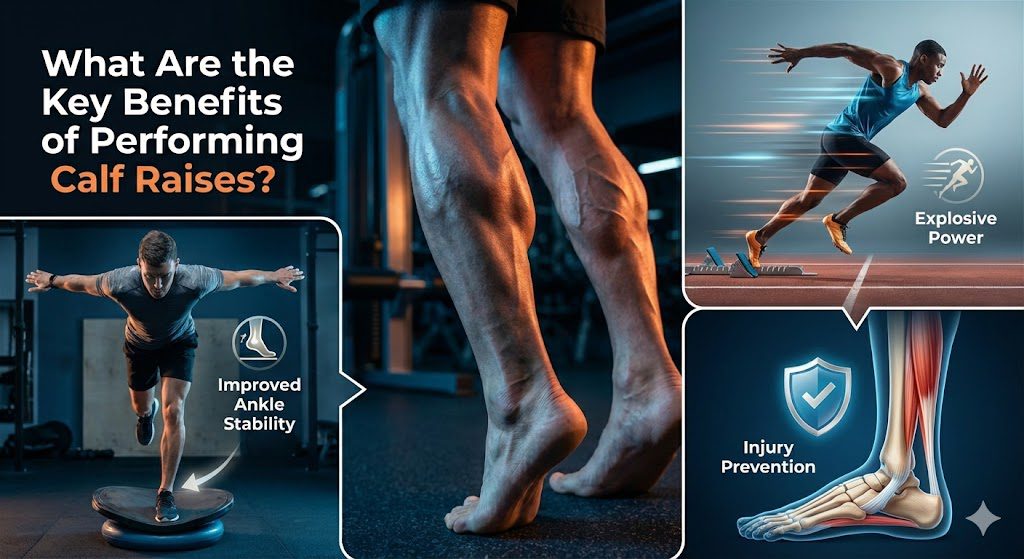
First and foremost, the aesthetic benefit of hypertrophy helps balance the leg physique, preventing the “chicken leg” look that occurs when the quadriceps are developed but the lower legs are neglected. However, the functional benefits are equally important. The calf muscles are responsible for the “toe-off” phase of gait; strengthening them directly improves your ability to walk, run, and sprint efficiently.
Additionally, ankle stability is dramatically improved through regular calf training. The triceps surae stabilizes the ankle joint during dynamic movements, reducing the risk of rolls and sprains. Furthermore, eccentric calf raises (lowering the weight slowly) are a gold-standard rehabilitation method for strengthening the Achilles tendon, increasing its stiffness and ability to store elastic energy. According to a study published in the American Journal of Sports Medicine, eccentric calf strengthening protocols reduced pain and improved function in 90% of patients with chronic Achilles tendinopathy.
What Are the Most Effective Calf Raise Variations?
The most effective Calf Raise variations are the Standing Calf Raise, Seated Calf Raise, Donkey Calf Raise, and Single-Leg Calf Raise, categorized by the knee angle and equipment used. Consequently, a complete calf training routine should include a mix of these variations to target both muscle heads effectively. Let’s examine the distinct advantages of the two most popular variations.
Ideally, a comprehensive program rotates these exercises. The Donkey Calf Raise, popularized by Arnold Schwarzenegger, puts the hamstrings in a stretch while keeping the legs straight, offering a unique stretch on the calves that is difficult to replicate with other movements. Meanwhile, Single-Leg variations (holding a dumbbell) are essential for correcting muscular imbalances between the left and right legs.
Standing vs. Seated Calf Raises: Which Is Better for Mass?
Standing Calf Raises are better for overall mass because they target the larger Gastrocnemius muscle, while Seated Calf Raises are superior for developing the Soleus to add width to the lower leg. Therefore, neither is strictly “better” in isolation; they are complementary exercises that must both be performed for maximal lower leg development.
Comparison details:
- Standing Calf Raise: Allows for heavier loading (often 1.5x to 2x body weight). It builds the “peak” of the calf. It recruits the most total muscle mass in the lower leg.
- Seated Calf Raise: Isolates the Soleus. Since the Soleus is predominantly slow-twitch muscle fiber, this variation often responds well to higher volume and strict control. It adds the “3D” look to the leg when viewed from the front or side.
In conclusion, focusing only on one leaves potential gains on the table. A ratio of 2:1 (Standing to Seated exercises) is often recommended for general hypertrophy
Do Calf Raises Count as a Compound Movement?
No, Calf Raises do not count as a compound movement; they are strictly classified as an isolation exercise because they involve movement at only one joint (the ankle). Unlike squats or lunges which engage the hips, knees, and ankles simultaneously, calf raises focus tension almost exclusively on the triceps surae. However, this classification does not diminish their value; rather, it highlights their specific role in targeted muscle development.
To elaborate, a compound movement is defined by the engagement of two or more joints and multiple muscle groups working in unison. For instance, a deadlift is compound. In contrast, during a calf raise, the knee remains locked (or fixed in a bent position) and the hip is stationary. The only dynamic action is plantarflexion at the ankle joint.
Consequently, because they are an isolation movement, Calf Raises are typically performed toward the end of a leg workout, after the heavy compound lifting is complete. This ensures that the calves are not pre-fatigued before they are needed to stabilize heavy squats or deadlifts. Nevertheless, for those with lagging calves, prioritizing them as the first exercise (the “priority principle”) is a valid strategy to apply maximum energy to this isolation movement.
Troubleshooting and Optimizing Your Calf Training Strategies
Troubleshooting and optimizing your calf training strategies requires addressing common errors such as bouncing reps, insufficient range of motion, and neglecting antagonist training, while also customizing frequency and tempo. Specifically, many lifters fail to see growth not because of genetics, but because they treat calves as an afterthought, using momentum rather than muscle tension. Below, we explore advanced micro-strategies to break through training plateaus.
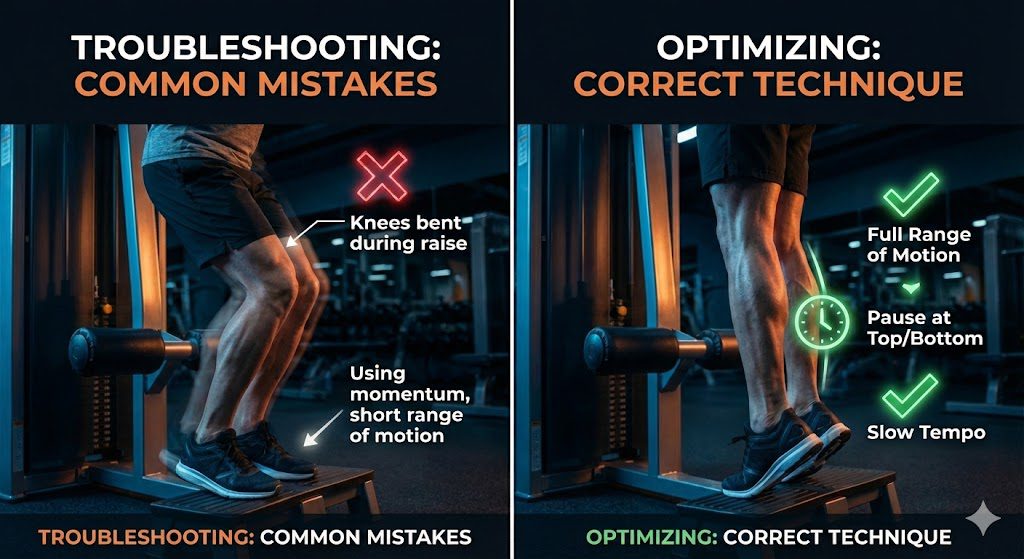
Crucially, the “bounce” out of the bottom position utilizes the Achilles tendon’s elastic recoil rather than muscular contraction. To fix this, implement a strict 2-second pause at the bottom of every rep to dissipate that elastic energy, forcing the muscle fibers to do the heavy lifting. Additionally, varying your foot placement (toes in vs. toes out) has a negligible effect compared to simply focusing on a full, deep stretch and a hard peak contraction.
Tibialis Raises vs. Calf Raises: Why Should You Train the Antagonist Muscle?
Tibialis Raises train the Tibialis Anterior (the front of the shin), which is the antagonist muscle to the calves, helping to balance the lower leg, improve deceleration, and prevent shin splints. Just as you train triceps to balance biceps, you must train the front of the leg to balance the back. Furthermore, a stronger Tibialis Anterior allows for greater dorsiflexion, which can actually increase the range of motion for your calf raises.
Detailed breakdown:
- Balance: Overdeveloped calves and weak shins create a muscle imbalance that disrupts ankle mechanics.
- Performance: The Tibialis acts as the “brakes” for the body. Strengthening it improves stopping power and knee stability.
- Aesthetics: A developed Tibialis adds muscular detail to the front of the lower leg, making the whole leg look bigger.
Is It Possible to Grow Calves with “Bad Genetics”?
It is entirely possible to grow calves even with “bad genetics” (typically defined as high muscle insertions), although the maximum potential volume may be lower than someone with low insertions. Realistically, “high calves” mean the muscle belly ends high on the lower leg, leaving a long Achilles tendon. While you cannot change tendon length, you can significantly increase the cross-sectional area of the muscle belly that does exist through consistent, high-intensity training.
Strategies for “High Insertion” Calves:
- Focus on the Soleus: Since the Soleus sits under the Gastrocnemius and runs lower down the leg, developing it can fill out the lower portion of the calf visually.
- Volume is Key: Calves recover quickly. Increasing frequency to 3-4 times per week can trigger growth in stubborn muscle groups.
- Mental Connection: High insertion calves often struggle with activation. Focus on the “squeeze” rather than the weight.
Can Calf Raises Help with Achilles Tendonitis Recovery?
Yes, Calf Raises, specifically eccentric variations, are the gold-standard treatment for Achilles Tendonitis recovery, as they stimulate collagen remodeling and increase the load-bearing capacity of the tendon. Specifically, the Alfredson Protocol involves performing high-volume eccentric heel drops (lowering phase only) to rehabilitate the tendon matrix. However, this should always be done under the guidance of a physical therapist if pain is acute.
Mechanism of Action:
- Controlled Loading: Tendons require load to heal. Rest alone often leads to atrophy.
- Eccentric Focus: The lengthening phase puts mechanical stress on the tendon cells (tenocytes), signaling them to produce new collagen and align fibers correctly.
- Pain Management: Interestingly, loading the tendon often reduces pain signals over time compared to complete rest.
Are High Reps or Heavy Weights Better for Slow-Twitch Fibers?
A combination of high reps and heavy weights is ideal, but high reps (15-25 range) are generally more effective for the Soleus due to its predominant slow-twitch fiber composition (Type I), while heavy weights (8-12 range) stimulate the Gastrocnemius (mixed Type I and II). Therefore, a periodized approach covering the entire spectrum of rep ranges ensures maximum hypertrophy for both muscle types.
Optimization Guide:
- Soleus (Seated): 50-90% Slow-Twitch. Responds best to long time-under-tension. Aim for sets of 20-30 reps or sets lasting 60+ seconds.
- Gastrocnemius (Standing): Mixed fibers. Responds well to explosive concentric movements and heavier loads. Aim for sets of 8-15 reps with controlled negatives.
- Progressive Overload: Regardless of rep range, you must increase the weight or reps over time. The calves carry your body weight all day; they require significant overload to adapt.

Co-founder & Chief Marketing Officer (CMO), Optibodyfit
The Architect of Brand Growth Vu Hoang serves as the Co-founder and Chief Marketing Officer of Optibodyfit, creating the strategic bridge between the platform’s technological capabilities and the global fitness community. Partnering with CEO Huy Tran to launch the company in November 2025, Vu has been instrumental in defining Optibodyfit’s market identity and orchestrating its rapid growth trajectory.
Strategic Vision & Execution With a sophisticated background in digital marketing and brand management, Vu creates the narrative that powers Optibodyfit. He understands that in a crowded health-tech market, technology alone is not enough; it requires a voice. Vu is responsible for translating the platform’s massive technical value—an unprecedented library of over 20,000 exercises—into compelling, human-centric stories.
His mandate goes beyond simple user acquisition. Vu leads a comprehensive marketing ecosystem that encompasses content strategy, community engagement, and digital performance optimization. He focuses on solving a core user problem: “decision fatigue.” By structuring marketing campaigns that guide users through the vast database, he helps transform an overwhelming amount of information into personalized, actionable fitness solutions.
Building a Global Community At the heart of Vu’s philosophy is the belief that fitness is a universal language. Under his leadership, the marketing division focuses on cultivating a vibrant, inclusive community where users feel supported rather than intimidated. He leverages data analytics to understand user behavior, ensuring that Optibodyfit delivers the right content to the right person at the right time—whether they are a beginner looking for home workouts or an athlete seeking advanced technical drills.
Commitment to Impact Vu Hoang does not view marketing merely as a tool for sales, but as a vehicle for education and inspiration. His strategic direction ensures that Optibodyfit remains true to its mission of “Elevating Lifestyles.” By consistently aligning the brand’s message with the real-world needs of its users, Vu is driving Optibodyfit to become not just a tool, but an indispensable daily companion for fitness enthusiasts worldwide.