Maximize Gains: Are Calf Raises Without Weights Good for Building Muscle?
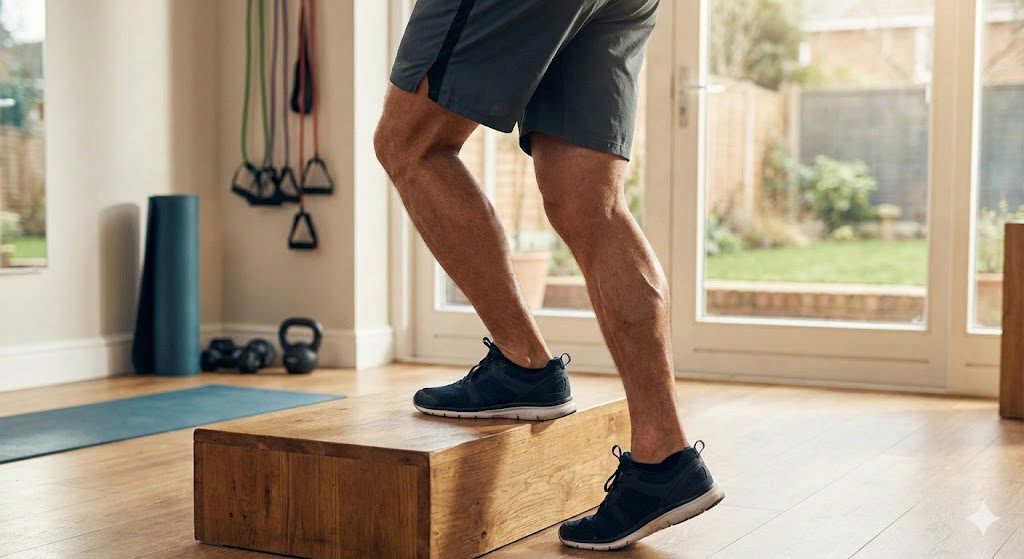
Yes, calf raises without weights are highly effective for building muscle, provided you maximize training intensity through high repetitions, single-leg variations, and strict time under tension. While heavy loads are standard for strength, the calves’ unique fiber composition responds exceptionally well to the metabolic stress and deep stretch achievable with bodyweight training. Furthermore, mastering the mind-muscle connection without equipment often corrects form issues that limit growth in weighted variations.
You must apply specific techniques to grow calves without equipment, such as unilateral loading (one leg at a time) to double the relative load and utilizing a full range of motion (ROM) off a step to engage the Gastrocnemius. Specifically, relying solely on high reps without a deficit stretch or peak contraction is the primary reason many home workouts fail to stimulate hypertrophy.
Standing bodyweight calf raises primarily target the Gastrocnemius and secondarily the Soleus, but understanding how they compare to weighted machine raises is crucial for long-term progression. In contrast, while machines offer easy progressive overload, bodyweight variations improve ankle stability and can be performed daily with higher frequency to force adaptation.
Beyond standard reps, there are overlooked factors that hinder calf growth at home, including ankle mobility restrictions, high muscle insertions (genetics), and neglecting the Tibialis Anterior. To fully understand this, we must dive deep into the mechanics of hypertrophy, advanced bodyweight strategies, and the micro-adjustments that turn a simple heel raise into a muscle-building powerhouse.
Are Calf Raises Without Weights Actually Effective for Hypertrophy?
Yes, calf raises without weights are effective for hypertrophy, because they allow for extreme volume, maximal stretch, and metabolic accumulation which are key drivers for calf growth. Actually, the calves are composed largely of slow-twitch muscle fibers, which require prolonged time under tension and high repetition ranges—factors easily achievable with bodyweight training—to stimulate growth. However, effectiveness drops significantly if you do not approach failure or use momentum to cheat the movement.
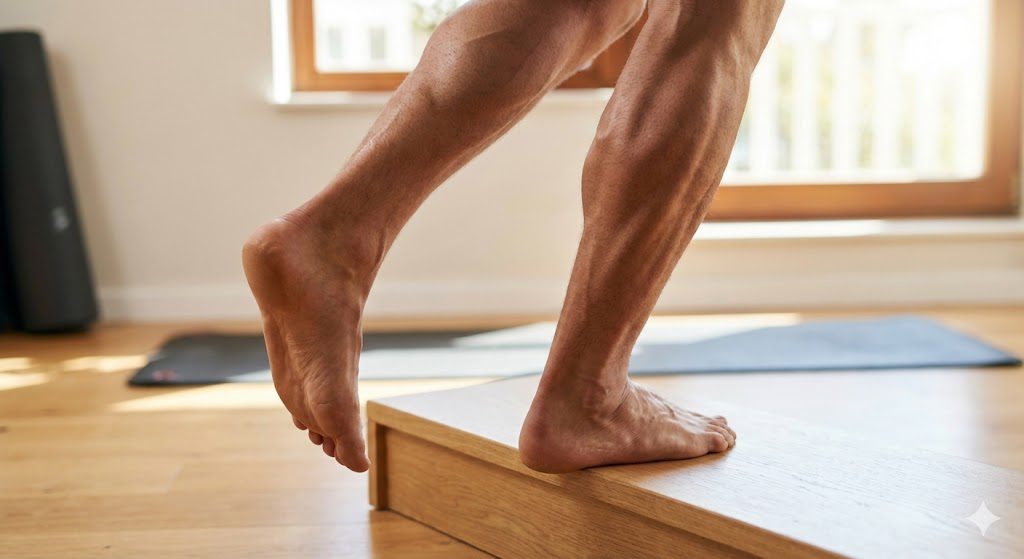
Therefore, understanding the mechanism of hypertrophy is essential to making bodyweight training work for your lower legs:
The Mechanism of Hypertrophy: Metabolic Stress vs. Mechanical Tension
Hypertrophy in the calves can be triggered via metabolic stress (the burn) just as effectively as mechanical tension (heavy weight). According to research from the Journal of Applied Physiology, muscle protein synthesis can be maximized with lighter loads (bodyweight) performed to failure, comparable to heavy loading. Specifically, when you perform bodyweight calf raises with high reps (20-30+) and short rest periods, you create an occlusion effect that pools blood in the muscle, triggering a potent growth response.
Distinguishing Strength from Size
It is vital to distinguish between strength and size. If your goal is to squat heavy, you need weighted calves. However, for aesthetic size (hypertrophy), bodyweight exercises are sufficient if the intensity is high. According to a study by McMaster University in 2012, lifting lighter weights until exhaustion builds muscle size equal to lifting heavy weights. Thus, bodyweight calf raises are “good” for aesthetics, even if they aren’t the fastest route to maximal 1RM strength.
What Muscles Do Standing Bodyweight Calf Raises Target?
Standing bodyweight calf raises primarily target the Gastrocnemius, a two-headed muscle that creates the “diamond” shape of the calf, and secondarily engage the Soleus. Fundamentally, the position of the knee dictates muscle recruitment; because the Gastrocnemius crosses the knee joint, keeping the leg straight maximizes its activation during the standing raise. In addition, this movement recruits the stabilizer muscles around the ankle to maintain balance.
To understand where your gains come from, we must analyze the specific roles of the target muscles:
The Gastrocnemius: The Aesthetic Powerhouse
The Gastrocnemius is the visible, superficial muscle comprising the medial and lateral heads. Specifically, this muscle consists of a higher ratio of fast-twitch fibers compared to the Soleus, meaning it has the highest potential for visible growth. When you perform standing calf raises, the knee extension puts the Gastrocnemius in a stretched position, allowing it to do the majority of the lifting work.
The Soleus: The Endurance Engine
The Soleus runs underneath the Gastrocnemius and is critical for adding width to the lower leg. While standing raises do work the Soleus, it is less mechanically disadvantaged than the Gastrocnemius in this position. However, bodyweight training is excellent for the Soleus because this muscle is practically fatigue-resistant (mostly slow-twitch fibers) and thrives on the high-repetition sets typical of home workouts.
What Are the Best Techniques to Grow Calves Without Equipment?
The best techniques to grow calves without equipment include Single-Leg Variations and maximizing Full Range of Motion (ROM). Because you lack external load (dumbbells or machines), you must manipulate mechanical disadvantage and leverage to create sufficient stimulus. Furthermore, simply bouncing up and down on the floor is insufficient; you need to increase the difficulty per rep to mimic the intensity of gym machines.
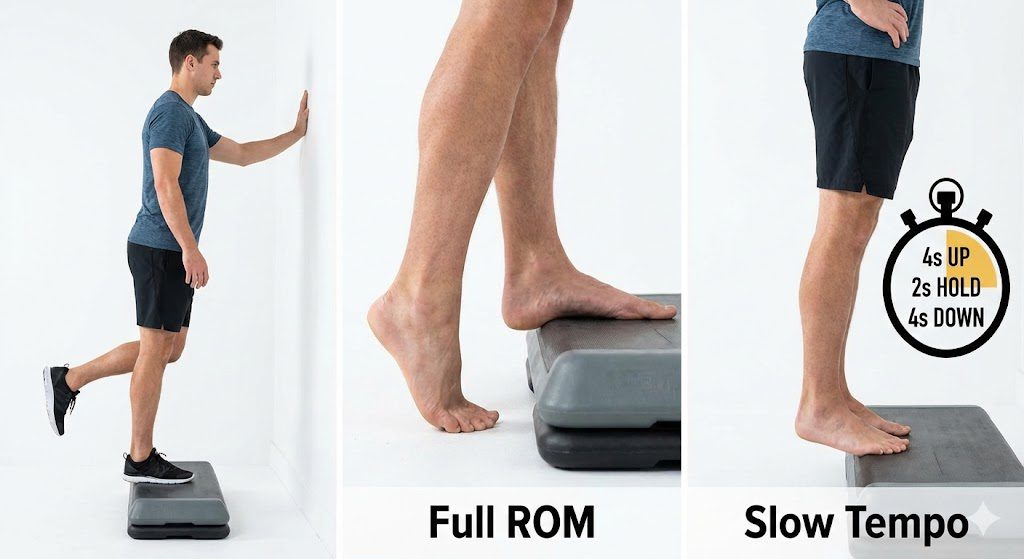
Here are the specific techniques that transform a warm-up movement into a mass builder:
Why Is the Single-Leg Variation Crucial for Home Workouts?
Unilateral loading is non-negotiable for bodyweight calf training. By standing on one leg, you immediately shift 100% of your body weight onto a single calf, effectively doubling the resistance compared to a two-legged raise. According to biomechanical analysis, the average male’s single-leg calf raise places a load equivalent to roughly 1.5 to 2 times bodyweight on the ankle joint lever, providing a stimulus heavy enough to trigger Type II muscle fiber growth.
How Does “Full Range of Motion” (ROM) Impact Muscle Growth?
Range of Motion (ROM) is more critical than rep count. To maximize growth, you must perform raises on a step or block (a “deficit”) to allow the heel to drop below the toes. Specifically, the stretched position under load is the most anabolic phase of the calf raise. By skipping the bottom stretch, you reduce hypertrophy potential by up to 50%. A proper rep requires a deep stretch at the bottom and a hard squeeze (peak contraction) at the very top.
How Do Bodyweight Calf Raises Compare to Weighted Machine Raises?
Bodyweight calf raises excel in convenience, joint safety, and stability improvement, while weighted machine raises dominate in ease of progressive overload and muscle isolation. In comparison, bodyweight variations force you to stabilize your own body, activating more small stabilizer muscles, whereas machines lock you into a fixed path, allowing you to push closer to absolute failure without balance concerns. Ultimately, both have their place, but bodyweight requires more mental focus to generate the same fatigue.
Let’s analyze the trade-offs to see which fits your current training phase:
The Case for Bodyweight Training
Bodyweight training is superior for frequency and joint health. Because the spinal loading is zero (unlike a standing smith machine raise), you can train calves daily or every other day, which is often necessary for stubborn muscle groups. Moreover, the instability of a single-leg bodyweight raise strengthens the ankles and improves proprioception, translating to better performance in athletic movements like running or jumping.
The Case for Weighted Machines
Weighted machines allow for precise progressive overload. Specifically, if you get stronger, you simply move the pin down the stack. With bodyweight, once you can do 30 single-leg reps, adding difficulty becomes harder (requiring slower tempo or shorter rest). According to the principle of mechanical tension, machines are more efficient for pure strength gains, but bodyweight can rival them for hypertrophy if the effort level is high enough.
What Are the Overlooked Factors That Hinder Calf Growth at Home?
The overlooked factors that hinder calf growth at home are Time Under Tension (TUT), Ankle Mobility restrictions, Genetic Insertions, and specific Tibialis Anterior weakness. Unfortunately, many people blame the lack of weights for their small calves, when in reality, they are failing to address these physiological and biomechanical details. By optimizing these variables, you can unlock growth even with minimal equipment.
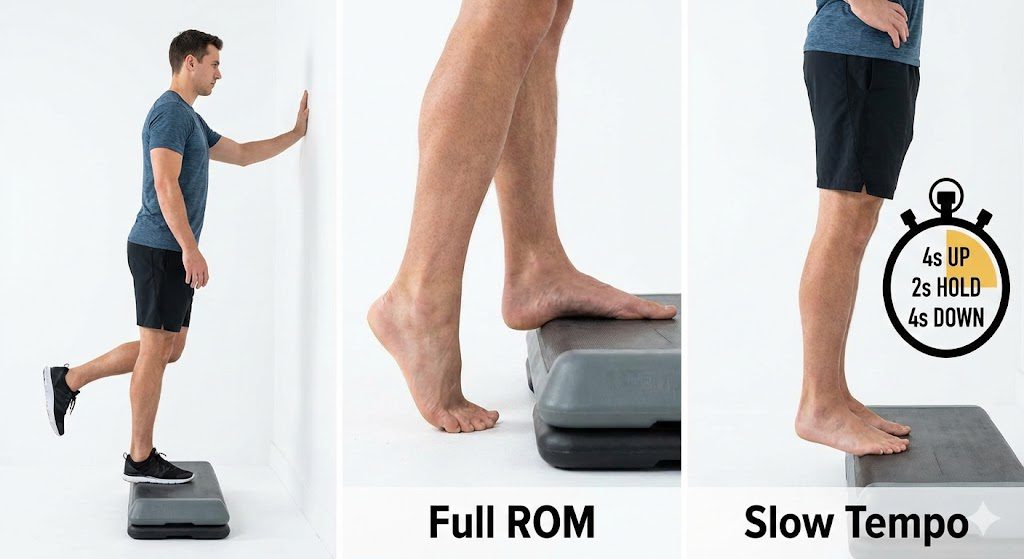
Let’s explore the micro-semantics of calf training that separate the amateurs from the pros:
Why Does “Time Under Tension” Matter More Than Rep Count?
Time Under Tension (TUT) is the true driver of bodyweight hypertrophy. Instead of counting to 50 reps quickly, perform 15 reps where each rep takes 4-5 seconds (2 seconds up, 1 second squeeze, 2 seconds down). Specifically, slowing down the eccentric (lowering) phase increases muscle fiber damage—the good kind that leads to repair and growth. Bouncing uses the Achilles tendon’s elasticity (stretch-shortening cycle) to lift the weight, robbing the muscle of tension.
How Does Ankle Mobility Affect Your Calf Raise Results?
Ankle mobility dictates your access to the deep stretch. If you have stiff ankles, your heel cannot drop low enough to fully stretch the Gastrocnemius fibers under load. Consequently, you are training through a partial range of motion, which drastically limits hypertrophy. According to sports physiotherapy standards, improving dorsiflexion flexibility allows for a greater metabolic stimulus during the eccentric portion of the lift.
Can You Change High Calf Insertions with Exercises?
No, you cannot change high calf insertions as they are determined by genetics, but you can maximize the muscle belly you do have. High insertions mean the tendon is long and the muscle belly is short, sitting high on the leg. While you cannot make the muscle grow “lower,” building the peak of the Gastrocnemius creates a wider, more powerful look that distracts from the high attachment point. Acceptance of biomechanics allows you to focus on realistic aesthetic improvements.
Why Should You Train the Tibialis Anterior (The Antagonist Muscle)?
You should train the Tibialis Anterior because it adds visual mass to the front of the lower leg and improves the strength of the calf raise via reciprocal inhibition. The Tibialis Anterior is the muscle on the front of your shin. By developing this muscle (through toe raises), you create a “3D” look for the lower leg, making the overall circumference larger. Furthermore, a strong Tibialis stabilizes the ankle, allowing you to control the eccentric phase of your calf raises more effectively.

Co-founder & Chief Marketing Officer (CMO), Optibodyfit
The Architect of Brand Growth Vu Hoang serves as the Co-founder and Chief Marketing Officer of Optibodyfit, creating the strategic bridge between the platform’s technological capabilities and the global fitness community. Partnering with CEO Huy Tran to launch the company in November 2025, Vu has been instrumental in defining Optibodyfit’s market identity and orchestrating its rapid growth trajectory.
Strategic Vision & Execution With a sophisticated background in digital marketing and brand management, Vu creates the narrative that powers Optibodyfit. He understands that in a crowded health-tech market, technology alone is not enough; it requires a voice. Vu is responsible for translating the platform’s massive technical value—an unprecedented library of over 20,000 exercises—into compelling, human-centric stories.
His mandate goes beyond simple user acquisition. Vu leads a comprehensive marketing ecosystem that encompasses content strategy, community engagement, and digital performance optimization. He focuses on solving a core user problem: “decision fatigue.” By structuring marketing campaigns that guide users through the vast database, he helps transform an overwhelming amount of information into personalized, actionable fitness solutions.
Building a Global Community At the heart of Vu’s philosophy is the belief that fitness is a universal language. Under his leadership, the marketing division focuses on cultivating a vibrant, inclusive community where users feel supported rather than intimidated. He leverages data analytics to understand user behavior, ensuring that Optibodyfit delivers the right content to the right person at the right time—whether they are a beginner looking for home workouts or an athlete seeking advanced technical drills.
Commitment to Impact Vu Hoang does not view marketing merely as a tool for sales, but as a vehicle for education and inspiration. His strategic direction ensures that Optibodyfit remains true to its mission of “Elevating Lifestyles.” By consistently aligning the brand’s message with the real-world needs of its users, Vu is driving Optibodyfit to become not just a tool, but an indispensable daily companion for fitness enthusiasts worldwide.