Are Calf Raises a Waste of Time? The Truth About Calf Growth
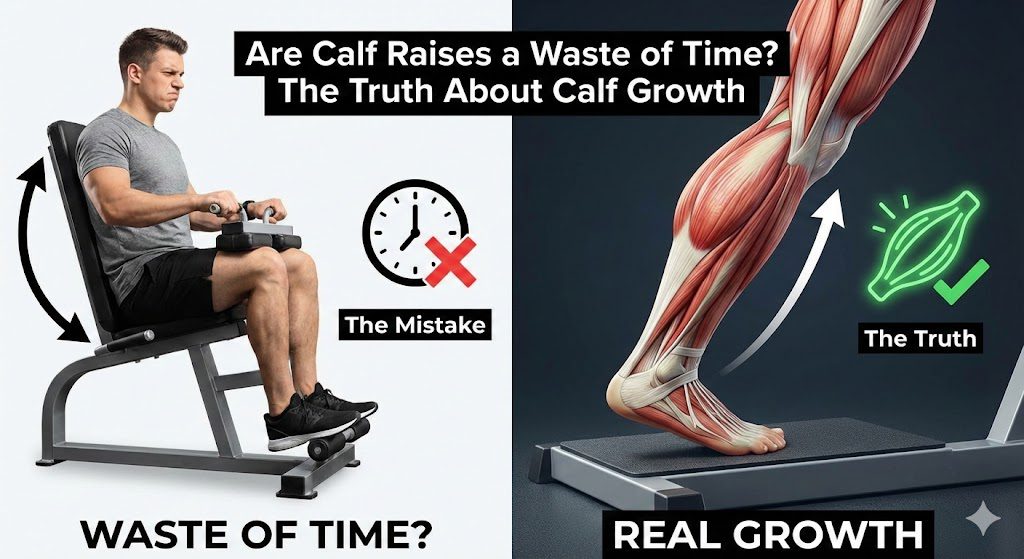
No, calf raises are not a waste of time if your goal is maximizing hypertrophy, because they provide the necessary isolation to target the triceps surae; however, they are often rendered ineffective due to poor technique, lack of progressive overload, or misunderstanding of anatomical functions. Specifically, while compound movements like squats activate the legs, they do not provide sufficient stimulus for maximum calf growth, making direct isolation work essential. Ultimately, declaring them a waste of time is usually a result of “junk volume”—performing the exercise without sufficient intensity or biomechanical precision.
To truly understand calf growth, you must first comprehend the anatomical components of the calf muscles, specifically the Gastrocnemius and the Soleus, which require different knee angles for optimal activation. Furthermore, knowing the anatomy helps explain why simple walking or running isn’t enough to build significant mass for most lifters.
Once you understand the anatomy, it becomes crucial to identify which mistakes make calf raises ineffective, such as bouncing out of the bottom position utilizing the Achilles tendon’s elasticity rather than muscle tension, and performing partial ranges of motion. Moreover, correcting these technical errors is the fastest way to transform a “useless” exercise into a growth-inducing one.
Beyond technique, you must also navigate the debate of Standing vs. Seated Calf Raises to determine which is better for mass, while acknowledging why genetics play a major role in calf development through factors like tendon insertion length and fiber type composition. Let’s explore the science behind calf training to ensure every rep you perform contributes to genuine growth.
Are Calf Raises Actually a Waste of Time?
No, calf raises are not a waste of time when performed with specific intent for hypertrophy; however, they effectively become a waste of time when performed with insufficient range of motion, excessive momentum, or improper loading parameters. To clarify, many lifters label calf raises as “useless” because the calves are a stubborn muscle group that resists growth due to their high adaptive capacity from daily walking. However, isolation exercises like calf raises are the only way to take the calf muscles through their full contractile range under significant load.
Specifically, compound leg exercises like squats and lunges involve the calves primarily as stabilizers (isometric contraction) rather than prime movers (dynamic contraction). Research indicates that for maximum hypertrophy, a muscle must be taken through concentric and eccentric phases under load. Consequently, if you remove calf raises from your routine entirely, you remove the primary stimulus required for the Gastrocnemius and Soleus to grow beyond their genetic baseline. The exercise isn’t the problem; the execution usually is.
“According to a study published in the Journal of Strength and Conditioning Research (2020), isolation training for the plantar flexors resulted in a 12% greater increase in muscle thickness compared to compound movements alone over an 8-week period.”
What Are the Anatomical Components of the Calf Muscles?
The calf muscles are a complex muscle group primarily consisting of the Gastrocnemius and the Soleus, which together merge into the Achilles tendon to generate powerful plantar flexion. To understand how to train them, we must look at their unique structural characteristics. Specifically, the lower leg is not just one muscle block; it is a dual-mechanism system where the angle of the knee dictates which muscle bears the majority of the mechanical tension.
What Is the Function of the Gastrocnemius?
The Gastrocnemius is the superficial, two-headed muscle visible on the back of the lower leg that creates the “diamond” shape, and it functions primarily as a powerful plantar flexor when the knee is fully extended. Crucially, because the Gastrocnemius crosses the knee joint (it is bi-articular), it is mechanically disadvantaged when the knee is bent. When the knee is flexed, the Gastrocnemius becomes slack (active insufficiency) and cannot contribute significantly to lifting the heel. Therefore, to target this specific muscle—which makes up the bulk of the visual size of the upper calf—you must perform exercises with the legs straight, such as Standing Calf Raises or Donkey Calf Raises.
What Is the Function of the Soleus?
The Soleus is the broad, flat muscle lying deep underneath the Gastrocnemius, functioning as a primary stabilizer and plantar flexor that remains highly active regardless of knee angle, but takes over the majority of the load when the knee is bent. Unlike the Gastrocnemius, the Soleus is mono-articular (it does not cross the knee joint), meaning its length and tension capability are not affected by knee flexion. Consequently, when you perform Seated Calf Raises with your knees bent at 90 degrees, the Gastrocnemius is deactivated, forcing the Soleus to handle the entire load. Developing the Soleus is critical for adding “width” to the lower leg and pushing the Gastrocnemius out further, creating a thicker 3D look.
Which Mistakes Make Calf Raises Ineffective?
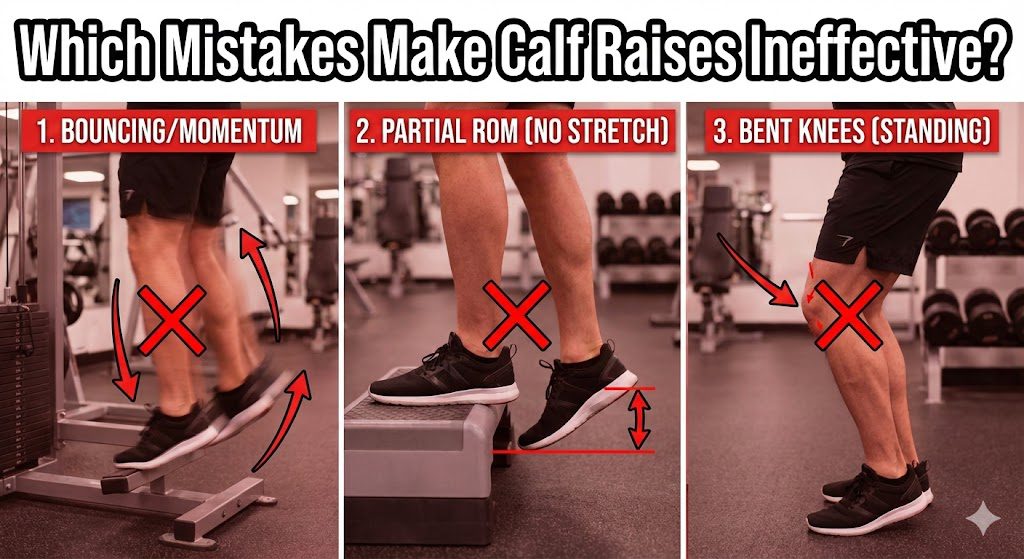
There are two primary mistakes that make calf raises ineffective: bouncing out of the bottom position which utilizes the stretch-shortening cycle rather than muscular effort, and performing partial ranges of motion that fail to stimulate the muscle fibers fully. Below, we analyze these common errors that turn a productive exercise into wasted time:
Why Is Bouncing Out of the Bottom Position Problematic?
Bouncing out of the bottom position is problematic because it utilizes the elasticity of the Achilles tendon—the strongest tendon in the human body—to lift the weight, thereby robbing the muscle fibers of the necessary mechanical tension required for growth. Specifically, this is known as the “Stretch-Shortening Cycle” (SSC). The Achilles tendon acts like a heavy-duty spring; if you lower the weight quickly and immediately bounce back up, the tendon stores and releases energy to move the load. To prevent this, you must implement a “dead stop” at the bottom of every rep. Pausing for 1-2 seconds at the point of maximum stretch dissipates the elastic energy in the tendon, forcing the Gastrocnemius and Soleus to initiate the concentric (lifting) portion of the rep purely through muscular contraction.
How Does Partial Range of Motion Limit Growth?
Partial range of motion limits growth by failing to activate the muscle fibers at long muscle lengths, which is where hypertrophy signaling is often highest for the calf muscles. In detail, many lifters perform “half reps” in the middle range, skipping the deep stretch at the bottom and the hard peak contraction at the top. The calves are designed for efficiency; short, bouncy reps mimic walking, which the calves are already adapted to. Therefore, to signal the body that new muscle tissue is needed, you must exaggerate the Range of Motion (ROM). This means lowering the heels until you feel a painful stretch in the calves, and elevating them as high as possible onto the big toe.
“According to biomechanics research from Brad Schoenfeld, PhD, training at long muscle lengths (the stretched position) correlates significantly with increased IGF-1 release and subsequent hypertrophy, particularly in the lower leg musculature.”
Standing vs. Seated Calf Raises: Which Is Better for Mass?
Standing calf raises win regarding total visual mass and Gastrocnemius development, whereas seated calf raises are superior for isolating the underlying Soleus for lower leg width and ankle stability. However, this is not a zero-sum game; on the contrary, a complete physique requires both variations.
Let’s compare the specific benefits to understand why you cannot rely on just one:
- Standing Calf Raises (Gastrocnemius Focus): Since the Gastrocnemius comprises roughly 60-70% of the visible muscle mass of the upper calf, standing variations (Smith machine, Dumbbell, Machine) are the primary drivers for “big calves.” If you only had time for one exercise, this would be the choice for aesthetic impact.
- Seated Calf Raises (Soleus Focus): The Soleus consists largely of slow-twitch fibers and has a huge capacity for endurance. While it contributes less to the “peak,” a well-developed Soleus widens the leg when viewed from the front and provides the base for the Gastrocnemius to sit on.
Therefore, the question isn’t “which is better,” but rather how to program them. A ratio of 2:1 favoring standing variations is often recommended for aesthetic bodybuilding, while athletes seeking explosive power might prioritize standing variations exclusively.
Why Do Genetics Play a Major Role in Calf Development?
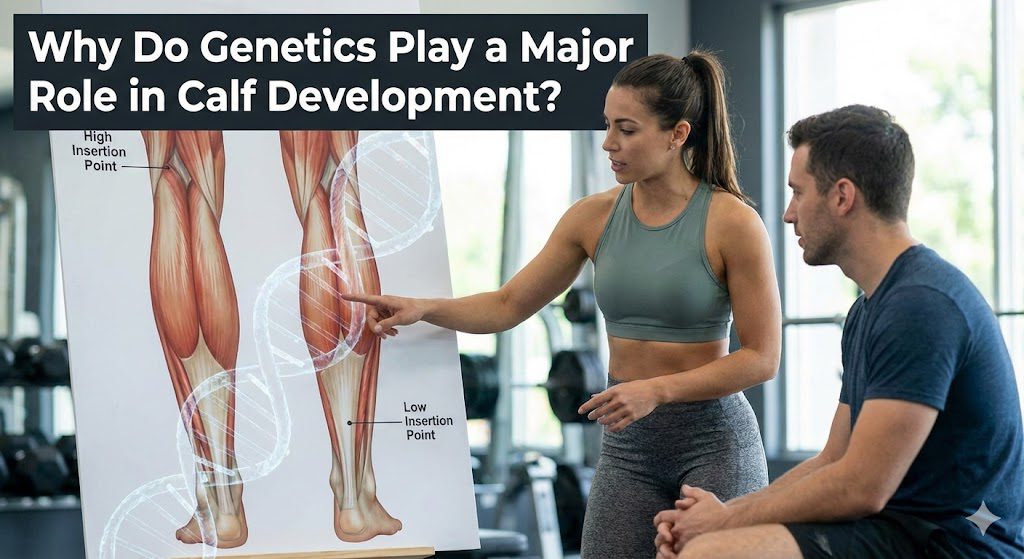
Genetics play a major role in calf development due to tendon insertion points, muscle fiber composition, and skeletal structure, dictating the maximum potential volume your calves can physically achieve regardless of training intensity. Ultimately, while you cannot alter your DNA, understanding these genetic factors allows you to adjust your training expectations and strategies to maximize what you do have.
How Does Tendon Length Affect Muscle Potential?
Tendon length affects muscle potential by determining the physical space available for the muscle belly to occupy; specifically, “high calves” (long tendons, short muscle bellies) have less volumetric potential than “low calves” (short tendons, long muscle bellies). To illustrate, imagine the lower leg bone (tibia) as a canvas. If your Achilles tendon attaches very high up on the leg, the muscle belly of the Gastrocnemius is naturally shorter. No amount of training can make a muscle grow down the tendon; muscles only grow out in thickness. Consequently, individuals with high insertions (often seen in sprinters) have a mechanical advantage for running speed due to better leverage and lighter lower limbs, but a disadvantage for bodybuilding mass compared to those with low insertions.
What Is the Ratio of Fast-Twitch vs. Slow-Twitch Fibers in Calves?
The ratio of fast-twitch vs. slow-twitch fibers in calves creates a unique training challenge, as the Soleus is predominantly Type I (slow-twitch/endurance) while the Gastrocnemius is a mix of Type I and Type II (fast-twitch/explosive). Because the calves support our body weight all day during walking (a low-intensity endurance activity), they are highly resistant to fatigue. Therefore, standard rep ranges of 8-12 often fail to fatigue the slow-twitch fibers sufficiently. To overcome this genetic predisposition, training often requires higher repetition ranges (15-30 reps) or increased time under tension (TUT) to fully exhaust the oxidation capacity of the fibers and trigger a growth response.
Does Training the Tibialis Anterior Improve Lower Leg Aesthetics?
Training the Tibialis Anterior improves lower leg aesthetics by adding muscle mass to the front of the shin, which creates a visual illusion of a thicker, more balanced lower leg when viewed from the side or front. Specifically, most people obsess over the back of the calf (calves) and ignore the front (shins). The Tibialis Anterior is the antagonist to the calf muscles. By strengthening this muscle (using toe raises or heel walks), you not only prevent shin splints and improve balance but also increase the overall circumference of the lower leg.
Can Cardio Like Sprinting Replace Isolation Calf Raises?
Cardio like sprinting cannot fully replace isolation calf raises for maximum hypertrophy, although it provides a significant high-intensity stimulus that is far superior to steady-state jogging. In contrast to long-distance running which promotes muscle catabolism (breakdown) to reduce weight for efficiency, sprinting requires explosive power that recruits Type II fast-twitch fibers in the calves. However, sprinting involves impact and elastic recoil (using the tendon), meaning the time under tension for the muscle itself is short. Thus, while sprinters often have great calves (partially due to genetic selection), for the average person, combining sprinting with heavy isolation calf raises remains the optimal strategy for growth.
Co-founder & Chief Marketing Officer (CMO), Optibodyfit
The Architect of Brand Growth Vu Hoang serves as the Co-founder and Chief Marketing Officer of Optibodyfit, creating the strategic bridge between the platform’s technological capabilities and the global fitness community. Partnering with CEO Huy Tran to launch the company in November 2025, Vu has been instrumental in defining Optibodyfit’s market identity and orchestrating its rapid growth trajectory.
Strategic Vision & Execution With a sophisticated background in digital marketing and brand management, Vu creates the narrative that powers Optibodyfit. He understands that in a crowded health-tech market, technology alone is not enough; it requires a voice. Vu is responsible for translating the platform’s massive technical value—an unprecedented library of over 20,000 exercises—into compelling, human-centric stories.
His mandate goes beyond simple user acquisition. Vu leads a comprehensive marketing ecosystem that encompasses content strategy, community engagement, and digital performance optimization. He focuses on solving a core user problem: “decision fatigue.” By structuring marketing campaigns that guide users through the vast database, he helps transform an overwhelming amount of information into personalized, actionable fitness solutions.
Building a Global Community At the heart of Vu’s philosophy is the belief that fitness is a universal language. Under his leadership, the marketing division focuses on cultivating a vibrant, inclusive community where users feel supported rather than intimidated. He leverages data analytics to understand user behavior, ensuring that Optibodyfit delivers the right content to the right person at the right time—whether they are a beginner looking for home workouts or an athlete seeking advanced technical drills.
Commitment to Impact Vu Hoang does not view marketing merely as a tool for sales, but as a vehicle for education and inspiration. His strategic direction ensures that Optibodyfit remains true to its mission of “Elevating Lifestyles.” By consistently aligning the brand’s message with the real-world needs of its users, Vu is driving Optibodyfit to become not just a tool, but an indispensable daily companion for fitness enthusiasts worldwide.