Avoiding Damage: Can You Do Renegade Rows with Bowflex SelectTech 552s?
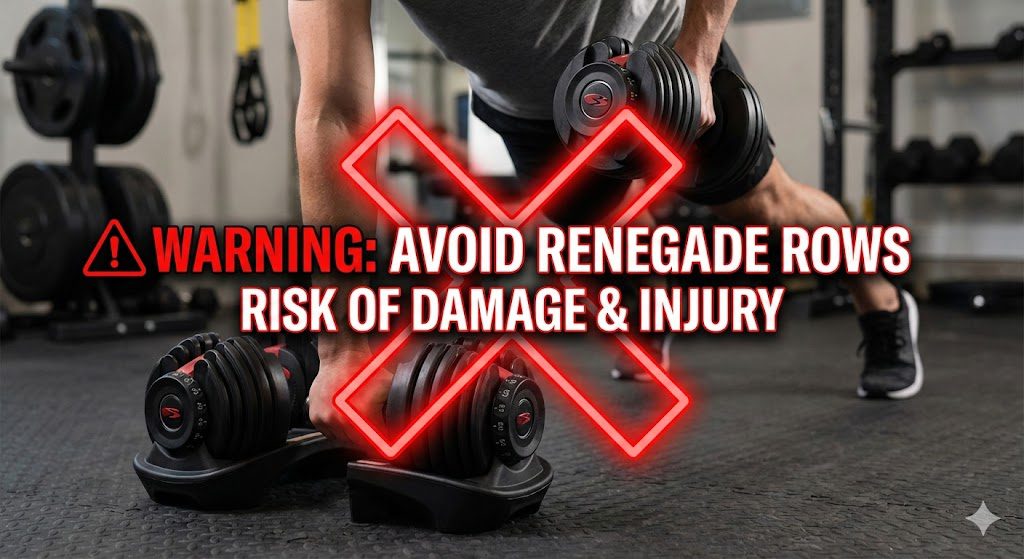
No, you cannot safely perform renegade rows with Bowflex SelectTech 552s because the locking mechanism is not designed to support body weight, specifically leading to cracked internal discs, permanently damaged locking tabs, and potential wrist injury. Consequently, using these adjustable dumbbells as push-up bars will almost certainly break them, rendering the weight selection dial useless and voiding your warranty immediately. Therefore, for the safety of both the user and the equipment, you must avoid placing vertical or lateral pressure on the handle while the unit is on the ground.
The Bowflex locking mechanism becomes extremely fragile under body weight due to the specific alignment of the internal plastic tabs and gears, which are engineered solely for vertical lifting tension, not the compressive force of a plank position. To explain, when you perform a renegade row, the lateral pressure applied to stabilize your body shears the delicate plastic components inside the handle assembly. As a result, the dial system misaligns, causing plates to jam or fall off unexpectedly during subsequent lifts.
There are several critical risks of using adjustable dumbbells as push-up bars, including catastrophic equipment failure, loss of warranty coverage, wrist strain from instability, and potential impact injuries from falling plates. Specifically, the most common outcome is the breakage of the locking pin, which is the “heart” of the SelectTech system. Furthermore, once this pin snaps, the dumbbell remains stuck at a specific weight or fails to hold plates entirely, turning an expensive piece of equipment into a paperweight.
To understand the best equipment for this exercise, we must compare the difference between Hex Dumbbells and SelectTechs for ground work, focusing on structural integrity and stability. In short, solid cast iron Hex dumbbells provide a stable, flat foundation perfect for ground-based exercises, whereas Bowflex SelectTechs feature moving parts and a rounded base that creates instability. However, if you only own Bowflex, you need to know how to modify your workout to protect your equipment while still achieving your fitness goals. Let’s explore the safe alternatives, warranty implications, and how to spot damage if you have already attempted this move.
Can you safely perform renegade rows with Bowflex SelectTech 552s?
No, you cannot safely perform renegade rows with Bowflex SelectTech 552s, as doing so creates a high probability of destroying the internal locking mechanism, voiding the manufacturer’s warranty, and causing personal injury through equipment collapse.
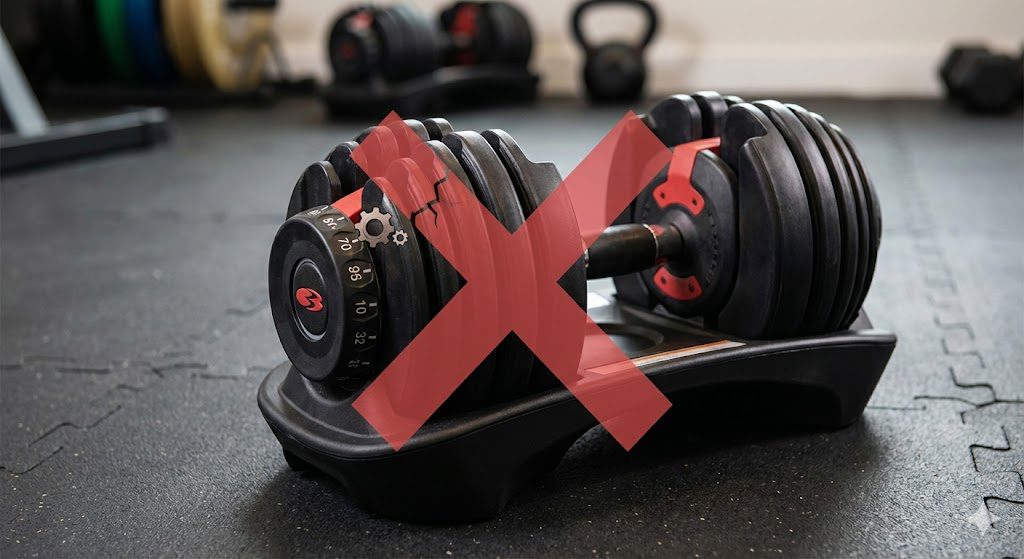
Unfortunately, despite the versatility of the SelectTech 552s, this specific exercise represents the single fastest way to break them. To clarify, the structural design of an adjustable dumbbell differs fundamentally from a solid fixed-weight dumbbell. Specifically, the handle is not a solid bar but a complex housing for plastic gears and selectors. Consequently, when you bear your body weight on the handles, you are not pressing on steel; you are pressing on thin plastic tabs intended only to slide between weight plates, not to support a 150lb+ human.
Moreover, ignoring this limitation leads to immediate consequences. For instance, many users report that after just one session of renegade rows, their dumbbells begin to rattle or fail to select weights properly. This happens because the pressure distorts the cradle alignment and the internal discs. Therefore, preserving the longevity of your home gym investment requires strictly prohibiting any exercise where the Bowflex supports your body weight against the floor.
According to the Bowflex SelectTech Owner’s Manual: “Do not use the dumbbells as handles for push-ups or other bodyweight exercises. The weight of your body can damage the internal mechanism and void the warranty.”
What makes the Bowflex locking mechanism fragile under body weight?
The Bowflex locking mechanism acts as a precision instrument that becomes fragile under body weight because it relies on thin nylon/plastic tabs, spring-loaded pins, and interlocking gears that possess zero tolerance for lateral compression.
To understand this better, we must look at the engineering. Essentially, the SelectTech system works by rotating a dial that extends or retracts locking tabs into the specific plates you wish to lift. However, these components are designed to withstand tensile force (being pulled down by gravity when you lift) but have very low resistance to compressive and shear force (being pushed sideways or crushed). Thus, when you assume the plank position for a renegade row, you apply forces that the engineering team never accounted for in the material selection.
How do the internal plastic tabs function during a row?
The internal plastic tabs function by sliding into slots on the metal weight plates to secure them to the handle, acting as the sole connection point between the handle and the weight. Critically, these tabs are made of high-density plastic, not metal.
-
Vertical vs. Lateral Load: When you lift normally (curl/press), the weight hangs vertically, putting even stress on the tab. When you do a renegade row, your stabilization muscles push sideways against the handle.
-
Shearing Effect: This lateral push creates a “shearing” force. Since the plates are resting on the ground, they don’t move, but the handle (pushed by your hand) tries to move sideways. This snaps the plastic tabs instantly.
-
The “Click” of Death: If you hear a loud crack or click while doing push-ups on these, it is usually the sound of a tab shearing off.
Why does the dial system fail under lateral pressure?
The dial system fails under lateral pressure because the weight of the user compresses the outer housing against the internal gear disc, causing the teeth of the gears to grind against each other or skip alignment. Specifically, the dial is connected to a long rod running through the dumbbell.
-
Compression Distortion: Your body weight bends the outer casing slightly. This slight bend reduces the clearance between moving parts.
-
Friction and Jamming: The gears, now pressed too tightly together, cannot rotate freely. If you try to turn the dial after compressing it, the teeth may strip.
-
Permanent Misalignment: Once the gear disc is warped from pressure, it will never align perfectly with the plates again, leading to the common issue where the dumbbell gets “stuck” in the base.
What are the risks of using adjustable dumbbells as push-up bars?
There are 4 major risks of using adjustable dumbbells as push-up bars: catastrophic mechanism failure, acute wrist and hand injury, sudden weight plate detachment, and complete financial loss due to voided warranty.
Beyond the mechanical damage, the safety profile for the user is abysmal. To elaborate, unlike hex dumbbells which have a flat, non-rolling surface, the Bowflex SelectTechs are roughly circular and sit in a plastic cradle (or on the plates themselves which can rotate slightly). Consequently, this instability forces your wrists to work harder to maintain balance. If the dumbbell rolls or the mechanism gives way, your wrist can snap sideways, leading to sprains or fractures.
Here is a breakdown of the specific risks involved:
-
Mechanism Failure: As detailed above, the plastic internals break. Once broken, the dumbbell cannot be repaired easily. Replacement parts are difficult to source and difficult to install.
-
Plate Detachment: This is the most dangerous risk. If a locking tab is partially damaged during the “push” phase, it may release the heavy metal plate during the “row” (pull) phase. A 10lb or 20lb metal plate falling from chest height onto your ribs or face is a serious medical hazard.
-
Wrist Instability: The round profile of the plates allows the dumbbell to roll. In a renegade row, you are supporting your weight on one hand. If that hand rolls, your shoulder and wrist absorb the torque.
-
Financial Loss: Bowflex SelectTechs are expensive (often $400+ USD). Using them in a manner explicitly forbidden by the manual voids your warranty. You will have no recourse for a replacement.
Safety Warning: Never perform exercises that involve leaning your body weight onto the Bowflex handles. The risk of the equipment collapsing under you is significant.
What is the difference between Hex Dumbbells and SelectTechs for ground work?
Hex Dumbbells are superior regarding stability and durability, making them the industry standard for ground work, whereas SelectTechs offer versatility and space-saving benefits but fail completely in structural integrity for weight-bearing exercises.
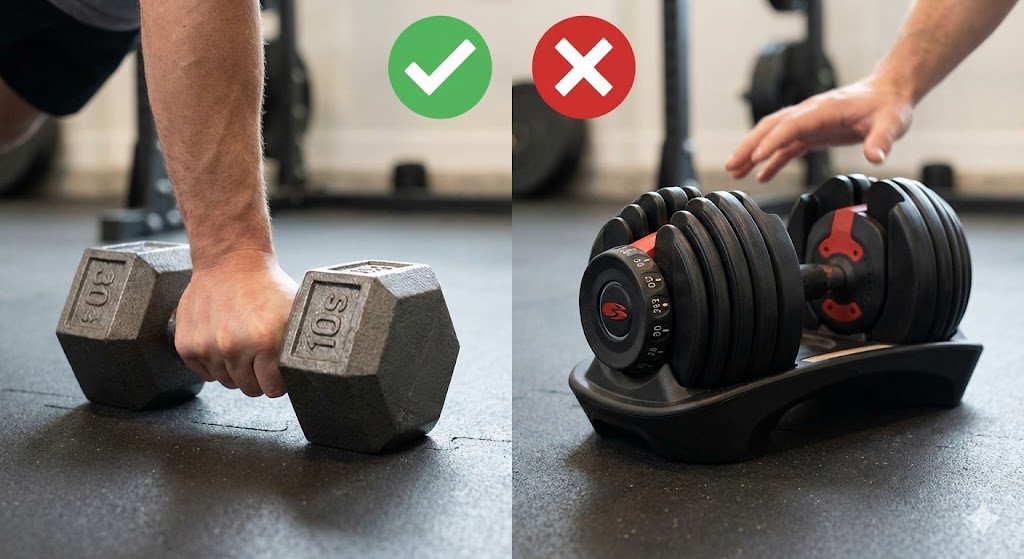
Ideally, a home gym should contain a mix of both, or at least a specific pair of fixed dumbbells for these types of movements. To compare, a Hex dumbbell is a solid piece of cast iron encased in rubber; it has no moving parts to break. Conversely, the SelectTech is a machine with over 50 component parts. Therefore, the “Right Tool for the Right Job” philosophy applies heavily here.
Comparison of attributes for Renegade Rows:
-
Stability (Base Shape):
-
Hex Dumbbells: Feature a hexagonal (6-sided) shape. They sit flat on the floor and do not roll. This provides a rock-solid platform for push-ups.
-
SelectTechs: Feature rounded plates with a flat spot, but the plates can shift and wobble independently. They are inherently unstable.
-
-
Durability (Material):
-
Hex Dumbbells: Iron and rubber. You can drop them, stand on them, and do push-ups on them. They are virtually indestructible.
-
SelectTechs: Plastic housing, nylon tabs, metal springs. Fragile under impact or compression.
-
-
Grip Height:
-
Hex Dumbbells: Low to the ground, good center of gravity.
-
SelectTechs: The handle is elevated high off the ground due to the large diameter of the plates. This increased height creates more leverage (torque) on the wrist, increasing injury risk.
-
Recommendation: If you love renegade rows, buy a single pair of cheap iron Hex dumbbells (e.g., 25lbs or 30lbs) specifically for this exercise. They will cost a fraction of the price of replacing your Bowflex.
How to Modify Your Workout to Protect Your Equipment?
To modify your workout to protect your equipment, you should separate the push-up from the row, utilize floor-based alternatives, monitor your equipment’s condition, and strictly adhere to warranty guidelines.
Fortunately, you do not have to abandon the benefits of the renegade row (core stability + back strength) just because you own Bowflex dumbbells. Instead, you can adapt the movement pattern to be “Bowflex-friendly.” By doing so, you preserve the integrity of the expensive dial mechanism while still targeting the latissimus dorsi and obliques effectively. Here are the specific strategies and knowledge you need to keep your gym running smoothly.
What are the safe alternatives to the Renegade Row?
Safe alternatives to the Renegade Row include the “Floor Push-Up to Row” modification, Kettlebell Renegade Rows, or Plank-Row hybrids that eliminate the compressive force on the dumbbell handle. Implementing these changes ensures zero weight is ever placed on the Bowflex mechanism:
-
The “Hand-Release” Method:
-
Assume a plank position with hands on the floor, placing the Bowflex dumbbells just outside your hands.
-
Perform a standard push-up on the floor (hands flat).
-
At the top of the push-up, reach out with one hand, grab the Bowflex handle, and perform the row.
-
Place the dumbbell gently back down and return your hand to the floor.
-
Benefit: Your body weight is on the floor, not the dumbbell.
-
-
Bench Supported Row: Use a weight bench to support your non-working arm. This removes the “core plank” aspect but allows you to row heavy with the Bowflex safely.
-
Dumbbell Plank Drag: Assume a plank position on the floor. Reach across your body, grab the dumbbell, and drag it across the floor to the other side. This builds anti-rotational core strength without crushing the dumbbell.
How does the Bowflex Warranty policy classify “User Error”?
The Bowflex Warranty policy classifies “User Error” as any damage resulting from misuse, abuse, or operation outside the intended design parameters, which explicitly includes using the device as a bodyweight support. Crucially, warranty claims often require you to send photos or the damaged unit to the manufacturer.
-
Forensic Evidence: Technicians can easily identify damage caused by renegade rows. Bent locking pins and sheared base tabs are “signature” signs of weight-bearing misuse.
-
Immediate Denial: If this specific type of damage is found, your claim will be denied. You will be responsible for the full cost of repairs or replacement.
-
Protecting Your Investment: Treat the SelectTechs as precision instruments, not brute-force tools. If you wouldn’t stand on your laptop, don’t do push-ups on your SelectTechs.
What are the signs of a damaged internal gear disc?
The signs of a damaged internal gear disc include resistance or “sticking” when turning the dial, plates failing to release from the base, rattling sounds inside the handle, and visible misalignment of the selection numbers. Early detection can prevent a minor issue from becoming a total failure:
-
Stuck Dials: If the dial feels “mushy” or won’t click into a number, the internal gear teeth are likely stripped or misaligned due to compression.
-
Base Jamming: If you cannot pull the dumbbell out of the base, it means the locking tabs are bent and have not fully retracted. Do not force it. Forcing it will snap the tabs completely.
-
Uneven Plate Spacing: Look at the gaps between the plates. If they look crooked or touch each other at odd angles, the internal rod is bent.
-
If you spot these signs: Stop using the dumbbell immediately. Continued use can cause the weights to fall off during a lift, leading to injury. Contact support immediately, though be aware of the warranty limitations discussed above.

Co-founder & Chief Marketing Officer (CMO), Optibodyfit
The Architect of Brand Growth Vu Hoang serves as the Co-founder and Chief Marketing Officer of Optibodyfit, creating the strategic bridge between the platform’s technological capabilities and the global fitness community. Partnering with CEO Huy Tran to launch the company in November 2025, Vu has been instrumental in defining Optibodyfit’s market identity and orchestrating its rapid growth trajectory.
Strategic Vision & Execution With a sophisticated background in digital marketing and brand management, Vu creates the narrative that powers Optibodyfit. He understands that in a crowded health-tech market, technology alone is not enough; it requires a voice. Vu is responsible for translating the platform’s massive technical value—an unprecedented library of over 20,000 exercises—into compelling, human-centric stories.
His mandate goes beyond simple user acquisition. Vu leads a comprehensive marketing ecosystem that encompasses content strategy, community engagement, and digital performance optimization. He focuses on solving a core user problem: “decision fatigue.” By structuring marketing campaigns that guide users through the vast database, he helps transform an overwhelming amount of information into personalized, actionable fitness solutions.
Building a Global Community At the heart of Vu’s philosophy is the belief that fitness is a universal language. Under his leadership, the marketing division focuses on cultivating a vibrant, inclusive community where users feel supported rather than intimidated. He leverages data analytics to understand user behavior, ensuring that Optibodyfit delivers the right content to the right person at the right time—whether they are a beginner looking for home workouts or an athlete seeking advanced technical drills.
Commitment to Impact Vu Hoang does not view marketing merely as a tool for sales, but as a vehicle for education and inspiration. His strategic direction ensures that Optibodyfit remains true to its mission of “Elevating Lifestyles.” By consistently aligning the brand’s message with the real-world needs of its users, Vu is driving Optibodyfit to become not just a tool, but an indispensable daily companion for fitness enthusiasts worldwide.