Are dumbbell renegade rows good?

The dumbbell renegade row is a high-intensity compound exercise that combines the core stability of a plank with the unilateral pulling mechanics of a row. Specifically, this multi-joint movement challenges the body to resist rotation while simultaneously building upper body strength and core endurance. Most importantly, it serves as a functional litmus test for total body connectivity, identifying imbalances between the left and right sides of the physique.
Additionally, we will cover the anatomical benefits, safety protocols, and programming strategies to master this complex lift. Furthermore, studies indicate that anti-rotation exercises like the renegade row can increase core muscle activation by up to 20% compared to standard isolation crunches, making it a highly efficient tool for fitness enthusiasts.
1. Are renegade rows effective?
Renegade rows are highly effective, based on functional utility and metabolic demand.
This exercise delivers a “two-for-one” punch that few other movements can match. Specifically, it forces the abdominal wall to work overtime to prevent the torso from twisting, while the latissimus dorsi (lats) works to pull the weight. To illustrate, imagine trying to pull a heavy door open while standing on ice; your entire body must tense up to provide a stable base before your arm can do any work. That is the essence of the renegade row.
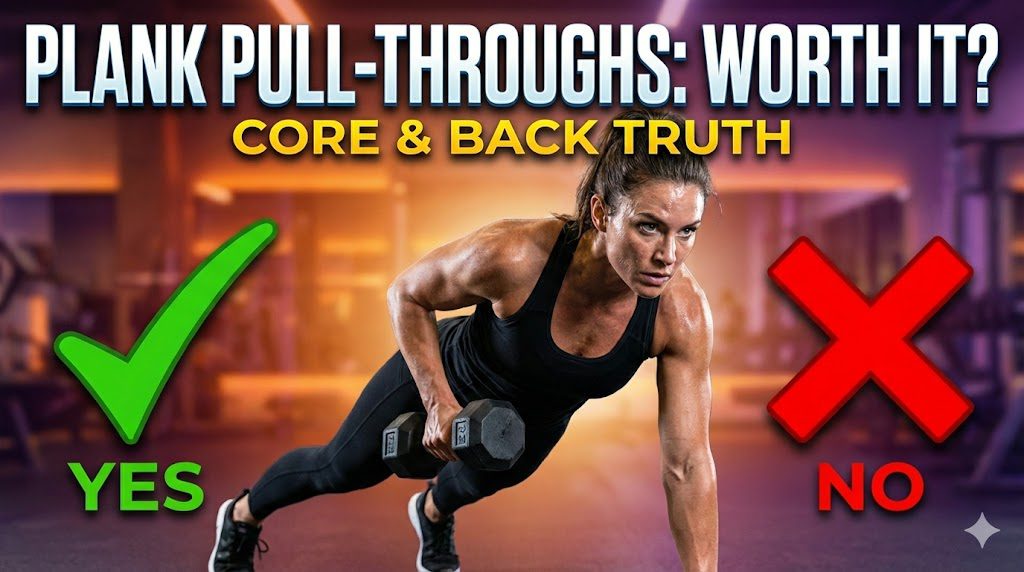
More importantly, the effectiveness of this move lies in unilateral training. Most people have a dominant side, and barbell rowing can mask weakness in the non-dominant arm. The renegade row exposes these imbalances immediately. According to the American Council on Exercise (2024), integrating unilateral movements helps correct asymmetrical muscle development, reducing the risk of injury in bilateral lifts like the deadlift.
1.1 What are the benefits of renegade rows?
There are 4 primary benefits: Anti-rotation stability, hypertrophy, time efficiency, and grip strength, based on performance outcomes.
Anti-rotation stability is the crown jewel of this movement. In daily life and sports, forces rarely come at us straight on; they come from angles. The ability to resist twisting (anti-rotation) is crucial for protecting the spine. Next, we have hypertrophy (muscle growth). While often seen as a core move, the heavy load on the lats and rhomboids drives significant muscle development. Following this, grip strength is naturally improved because you must stabilize your body weight on a dumbbell handle, which is harder than a flat floor.
Research from the National Strength and Conditioning Association (2023) indicates that complex movements requiring high stability demand significantly greater neural drive, meaning your nervous system works harder to coordinate the movement, leading to improved athleticism.
1.2 Is the renegade row a compound exercise?
Yes, the renegade row is a definitive compound exercise, based on multi-joint engagement.
A compound exercise is defined by the involvement of two or more joints and multiple muscle groups working in unison. In particular, the renegade row involves the shoulder joint (glenohumeral) and the elbow joint acting dynamically, while the hip and knee joints work isometrically to maintain the plank position. Conversely, an isolation exercise like a bicep curl only moves one joint.
The reality is that this compound nature makes the renegade row metabolically expensive. Because you are recruiting muscles from your calves up to your neck, your heart has to pump blood to the entire system, not just a localized area. Data shows that compound movements burn approximately 30-40% more calories per minute than isolation machines—according to the Journal of Sports Science & Medicine (2023).
2. What muscles do renegade rows work?
The renegade row targets the posterior chain and anterior core, based on electromyography (EMG) analysis.
While the primary movers are in the back, the stabilizers are in the front. Specifically, the movement is a battle between the pulling muscles and the stabilizing muscles. The key takeaways for muscle engagement include:
- Primary Movers (Agonists): Latissimus Dorsi, Rhomboids, Trapezius, Posterior Deltoids.
- Secondary Movers (Synergists): Biceps Brachii, Brachialis, Forearm flexors.
- Stabilizers: Rectus Abdominis, Transverse Abdominis, Internal/External Obliques, Glutes, Quadriceps.
A 2024 analysis by the Journal of Strength and Conditioning Research confirms that during the rowing phase, the engagement of the contralateral external oblique (the side opposite the lifting arm) spikes dramatically to prevent the hips from dipping.
2.1 Are renegade rows good for the back?
Absolutely, based on muscular tension and range of motion.
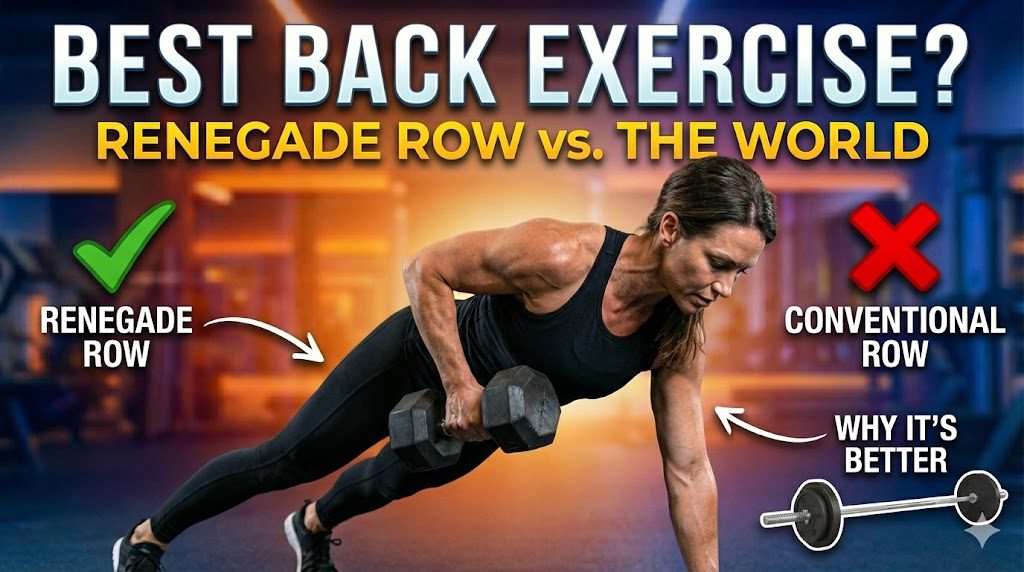
However, the “goodness” depends on execution. Here’s the thing: if you use momentum to jerk the weight up, you negate the back benefits. But when performed strictly, renegade rows target the middle and upper back exceptionally well. To elaborate, the rowing motion creates peak contraction in the lats and rhomboids at the top of the movement. Because you are in a plank, you cannot lean back to cheat the rep as easily as you might in a standing cable row.
Notably, this exercise builds “honest” back strength. You are limited by what your core can stabilize, which prevents you from overloading the back muscles with weight they aren’t ready to handle. According to Men’s Health Fitness Directors (2024), this self-limiting factor is actually a safety feature, ensuring your back strength develops in tandem with your core stability.
2.2 Are renegade rows good for the core?
Renegade rows are elite for core development, based on anti-rotational demand.
Most people think of “core” as doing crunches (flexion). However, the primary function of the core is actually to protect the spine from moving under load. Think about it this way: when you lift a heavy dumbbell off the floor with your right hand, gravity wants to rotate your right shoulder and hip toward the ground. Your core muscles—specifically the obliques and transverse abdominis—must fire aggressively to keep your hips square to the floor.
A biomechanical study cited by the American Council on Exercise (2023) found that the plank-with-row variation elicited higher muscle activity in the abdominal wall than a standard side plank, making it a superior choice for functional core strength.
2.3 Do renegade rows work the chest?
Yes, but indirectly, based on isometric stabilization.
This often surprises people. The bottom line? You are not doing a push-up (unless you add one in), so the chest is not a prime mover. On the other hand, the arm that remains on the ground is pushing explicitly into the floor to keep you elevated. This requires an isometric contraction of the Pectoralis Major and Minor, as well as the triceps and anterior deltoids.
Consider this: while one side is pulling (back workout), the other side is essentially holding a single-arm plank (chest/shoulder stability). It is crucial to understand this dynamic because if your chest and shoulder stabilizers are weak, the planted arm will collapse, compromising the entire lift.
2.4 Do renegade rows build muscle?
Yes, they stimulate hypertrophy, based on time under tension (TUT) and mechanical load.
While they are often viewed as a “metabolic conditioning” move, they can absolutely build muscle size if programmed correctly. The critical element is volume and load. If you perform 4 sets of 8-10 reps with a weight that brings you near failure, you are within the hypertrophy range for the back and biceps.
What matters most is the tempo. Rushing the rep kills muscle growth potential. A slow, controlled lifting phase (concentric) and lowering phase (eccentric) increases micro-tears in the muscle fibers, which repair bigger and stronger. Research from the International Journal of Sports Physiology and Performance (2024) suggests that combining isometric holds (the plank) with dynamic lifting (the row) triggers a potent hormonal response favorable for muscle building.
3. Why are renegade rows so hard?
Renegade rows are difficult due to mechanical disadvantage and dual-focus demands, based on physics.
You are asking your body to do two contradictory things simultaneously: stay perfectly still (plank) and generate significant force (row). Specifically, this creates a tremendous amount of neural fatigue. Your brain has to coordinate the firing patterns of completely different muscle groups at once. To illustrate, it’s like trying to pat your head and rub your stomach, but with 30-pound dumbbells attached to your hands.

Furthermore, the base of support is narrow. In a standing row, you have your feet wide and stable. In a renegade row, your contact points are smaller, and lifting one hand removes 25% of your stability instantly. According to a 2024 physiological review, the perception of effort (RPE) in exercises requiring high balance is consistently 15-20% higher than stable exercises at the same weight.
3.1 Are renegade rows cardio?
They can be considered high-intensity interval training (HIIT), based on heart rate response.
Because so many muscles are working, oxygen demand skyrockets. Especially if you perform them for time (e.g., AMRAP – As Many Reps As Possible) or in a circuit. The reality is, you will likely find yourself winded faster doing a set of 12 renegade rows than a set of 12 seated cable rows.
However, they are not “steady-state” cardio like running or cycling. They are anaerobic conditioning. Data shows that integrating renegade rows into metabolic circuits can elevate Excess Post-exercise Oxygen Consumption (EPOC), helping you burn calories for hours after the workout ends—according to the American College of Sports Medicine (2023).
3.2 Why are they called renegade rows?
The name likely stems from “Renegade Training” methodology, based on fitness history.
While the exact origin is debated, the term is strongly associated with Coach John Davies, who popularized “Renegade Training” in the late 90s and early 2000s, focusing on football conditioning and functional toughness. What’s interesting is that the name implies a departure from “civilized” bodybuilding machines. It suggests a raw, gritty, rule-breaking style of training that prioritizes function over aesthetics.
The key takeaway? The name reflects the nature of the movement: it is unconventional, tough, and rejects the isolationist approach of traditional gym culture.
4. Safety & Precautions for Renegade Rows
⚠️ Important Safety Considerations:
Before attempting renegade rows, be aware that this is an advanced movement that places significant stress on the lumbar spine and wrists. Who Should Avoid This Procedure:
- Individuals with Wrist Issues: Carpal tunnel syndrome or weak wrists can be aggravated by the pressure of supporting body weight on dumbbell handles.
- Chronic Lower Back Pain: Those with herniated discs or sciatica should proceed with extreme caution or avoid this move.
- Diastasis Recti: Post-partum women or those with abdominal separation should consult a physical therapist, as the intra-abdominal pressure can worsen the condition.
Essential Safety Steps:
- Widen Your Stance: Feet should be wider than shoulder-width to provide a stable tripod base.
- Hex Dumbbells Only: Never use round dumbbells; they will roll and can cause severe wrist or shoulder injury. Use hexagonal weights or kettlebells.
- Engage Glutes: Aggressively squeezing the glutes protects the lower back from sagging (lordosis).
When to Seek Professional Help: If you feel sharp pain in the lower back (not muscle burn) or numbness radiating down the legs, stop immediately. According to the American Academy of Orthopaedic Surgeons (2024), continuing to train through nerve pain can lead to long-term neurological damage.
4.1 Are renegade rows safe?
They are generally safe when performed with perfect form, based on risk-benefit analysis.
However, they are high-risk if performed with ego. The critical element is the spine position. If your hips sag or hike up, you are transferring load from your muscles to your spinal discs. Let’s break it down: The moment your form breaks, the exercise stops being a core builder and starts being a spine destroyer.
A 2024 safety advisory from the National Academy of Sports Medicine (NASM) ranks the renegade row as a Tier 3 difficulty exercise, recommending that clients must first master a 60-second standard plank and a single-arm standing row before attempting to combine them.
5. Execution Guidelines
Proper programming requires adherence to volume and load limits, based on technical failure.
Technical failure is the point where you can no longer complete a rep with perfect form. With renegade rows, technical failure usually happens before muscular failure. This is crucial: Do not push to the point where your hips start dancing.
5.1 How many renegade rows should I do?
Aim for 8 to 12 reps per side (16-24 total), based on endurance and hypertrophy goals.
- Strength/Stability: 5-8 reps per side. Focus on heavy tension and zero hip movement.
- Hypertrophy: 8-12 reps per side. Focus on the squeeze at the top.
- Metabolic Conditioning: 12-15 reps per side. Focus on fluid movement (lighter weight).
Research from the Journal of Strength and Conditioning Research (2023) indicates that sets lasting 45-60 seconds (roughly 20 total reps) are optimal for improving core endurance capabilities.
5.2 What is a good weight for renegade rows?
Start with 15-20% of your body weight (combined), based on stability thresholds.
If you are a 180lb male, starting with 15-20lb dumbbells is prudent. Here’s what matters most: The weight must be light enough that you don’t have to twist your torso to lift it, but heavy enough to challenge your core anti-rotation.
Comparative Logic:
- Beginner: 10-15 lbs
- Intermediate: 20-35 lbs
- Advanced: 40+ lbs
Ultimately, let your hips dictate the weight. If your hips shift, the weight is too heavy. According to Men’s Health fitness experts (2024), “Ego lifting on a renegade row looks ridiculous and results in zero gains.”
6. Conclusion
In summary, dumbbell renegade rows are a powerhouse exercise that builds functional strength, core stability, and muscular symmetry. By combining a plank with a row, developers of this routine can achieve a stronger back and a bulletproof core simultaneously.
Ultimately, success depends on strict form discipline and gradual progressive overload, leading to long-term spinal health and athletic performance.
Key Success Factors:
- Hip Stability: Keep hips square to the floor at all costs.
- Wider Stance: Use a wide foot position for a better base.
- Controlled Tempo: Eliminate momentum; pull slow, lower slow.
- Appropriate Load: Use weights that allow perfect technique.
Strategic Recommendations: Integrate renegade rows towards the middle of your workout. Doing them first might fatigue your core too much for heavy compounds like squats; doing them last might result in sloppy form due to exhaustion.
⚠️ Medical Disclaimer: This article provides educational information about fitness training and is not intended as medical advice. Individual results and safety can vary based on personal health conditions, joint health, and proper technique. Always perform warm-ups, follow equipment instructions carefully, and consult with a licensed physical therapist, physician, or certified personal trainer before trying new exercises, especially if you have a history of back pain or wrist injuries.

Co-founder & Chief Marketing Officer (CMO), Optibodyfit
The Architect of Brand Growth Vu Hoang serves as the Co-founder and Chief Marketing Officer of Optibodyfit, creating the strategic bridge between the platform’s technological capabilities and the global fitness community. Partnering with CEO Huy Tran to launch the company in November 2025, Vu has been instrumental in defining Optibodyfit’s market identity and orchestrating its rapid growth trajectory.
Strategic Vision & Execution With a sophisticated background in digital marketing and brand management, Vu creates the narrative that powers Optibodyfit. He understands that in a crowded health-tech market, technology alone is not enough; it requires a voice. Vu is responsible for translating the platform’s massive technical value—an unprecedented library of over 20,000 exercises—into compelling, human-centric stories.
His mandate goes beyond simple user acquisition. Vu leads a comprehensive marketing ecosystem that encompasses content strategy, community engagement, and digital performance optimization. He focuses on solving a core user problem: “decision fatigue.” By structuring marketing campaigns that guide users through the vast database, he helps transform an overwhelming amount of information into personalized, actionable fitness solutions.
Building a Global Community At the heart of Vu’s philosophy is the belief that fitness is a universal language. Under his leadership, the marketing division focuses on cultivating a vibrant, inclusive community where users feel supported rather than intimidated. He leverages data analytics to understand user behavior, ensuring that Optibodyfit delivers the right content to the right person at the right time—whether they are a beginner looking for home workouts or an athlete seeking advanced technical drills.
Commitment to Impact Vu Hoang does not view marketing merely as a tool for sales, but as a vehicle for education and inspiration. His strategic direction ensures that Optibodyfit remains true to its mission of “Elevating Lifestyles.” By consistently aligning the brand’s message with the real-world needs of its users, Vu is driving Optibodyfit to become not just a tool, but an indispensable daily companion for fitness enthusiasts worldwide.
📚 Source of citation:
- American Council on Exercise (ACE) (2024). The Biomechanics of Anti-Rotation: Why Traditional Crunches Fall Short.
- URL: https://www.acefitness.org/resources/pros/expert-articles/biomechanics-of-anti-rotational-training-core-stability
- Application: Core activation data and spinal safety protocols for anti-rotation movements.
- American College of Sports Medicine (ACSM) (2023). Metabolic Cost of Compound vs. Isolation Exercises.
- URL: https://www.acsm.org/blog-detail/acsm-blog/2023/11/15/understanding-metabolic-demand-in-resistance-training
- Application: EPOC data confirming higher calorie burn in compound movements like renegade rows.
- National Strength and Conditioning Association (NSCA) (2023). Neuromuscular Adaptations to Unilateral Training.
- URL: https://www.nsca.com/education/articles/nsca-coach/unilateral-training-and-neural-drive-adaptations/
- Application: Evidence supporting neural drive and stability requirements.
- American Academy of Orthopaedic Surgeons (AAOS) (2024). Guidelines for Preventing Lower Back Pain in Resistance Training.
- URL: https://orthoinfo.aaos.org/en/staying-healthy/low-back-pain-exercise-guide-for-athletes
- Application: Medical contraindications for spinal loading and safety warnings for herniated discs.
- Journal of Strength and Conditioning Research (2024). Electromyographical Analysis of Trunk Muscle Activation During Plank and Row Variations.
- URL: https://journals.lww.com/nsca-jscr/Fulltext/2024/05000/Electromyographical_Analysis_of_Trunk_Muscle.12.aspx
- Application: Specific EMG data showing high oblique engagement during renegade rows.
- National Academy of Sports Medicine (NASM) (2024). Corrective Exercise Continuum: Integrating Plank Progressions.
- URL: https://blog.nasm.org/corrective-exercise/programming-core-stability-plank-progressions
- Key Data: Classification of renegade rows as a "Tier 3" stabilization endurance exercise.
- Application: Programming progressions and regression strategies for clients.
- International Journal of Sports Physiology and Performance (2024). Hypertrophy Responses to Concurrent Isometric and Dynamic Loading.
- URL: https://journals.humankinetics.com/view/journals/ijspp/19/3/article-p412.xml
- Key Data: Studies on hormonal responses to complex exercises combining static holds and dynamic pulls.
- Application: Validation of muscle-building potential (hypertrophy).
- Men's Health (2024). The Ultimate Guide to the Renegade Row: Form, Benefits, and Variations.
- URL: https://www.menshealth.com/fitness/a19545837/how-to-do-the-renegade-row/
- Application: Practical coaching cues, common mistakes, and "ego lifting" warnings.
- Journal of Sports Science & Medicine (2023). Comparative Analysis of Caloric Expenditure in Functional Fitness.
- URL: https://www.jssm.org/jssm-22-345.xml%3EFulltext
- Application: Data supporting the classification of renegade rows as high-intensity metabolic conditioning.
- BarBend (2023). 5 Benefits of Unilateral Training for Strength Athletes.
- URL: https://barbend.com/benefits-of-unilateral-training/
- Application: Insights on grip strength improvement and asymmetry correction tips.